2nd Price | BOMA+

Braunschweig

In collaboration with STAUTH Architekten Partnerschaftsgesellschaft mbB


Context and Guiding Principle

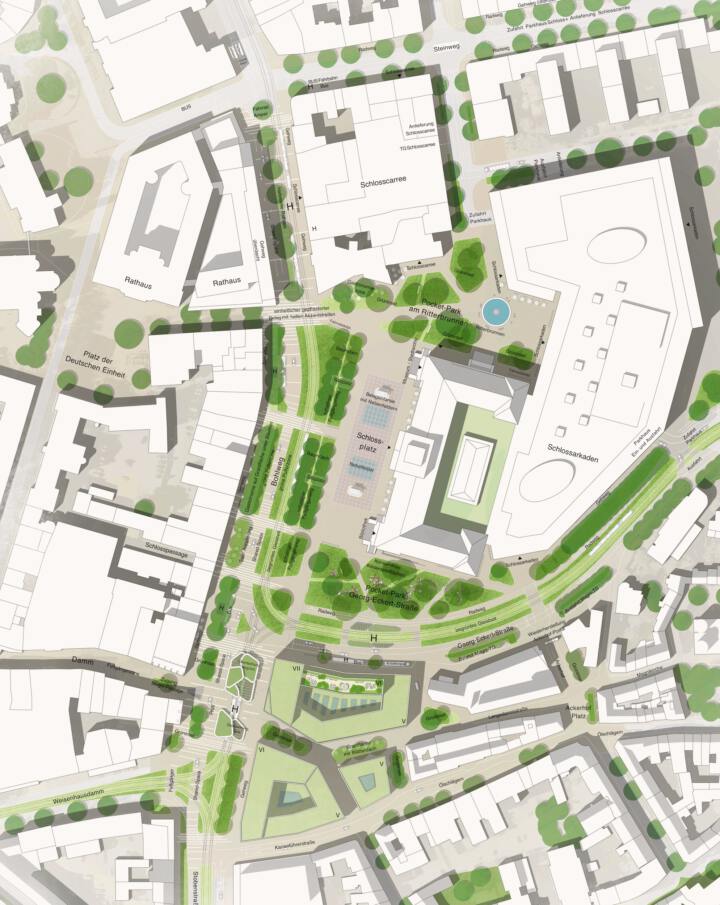
The competition site forms a central transitional space between Bohlweg, Schlosscarée, Schloss-Arkaden and the historic Magniviertel. Today, this urban space is characterised by oversized traffic areas, high levels of paving and a lack of visual and pedestrian connections. In particular, the isolating architecture of the Horten/Galeria complex and the existing design of the ‘Schloss’ tram stop prevent a natural connection with the adjacent Magniviertel.

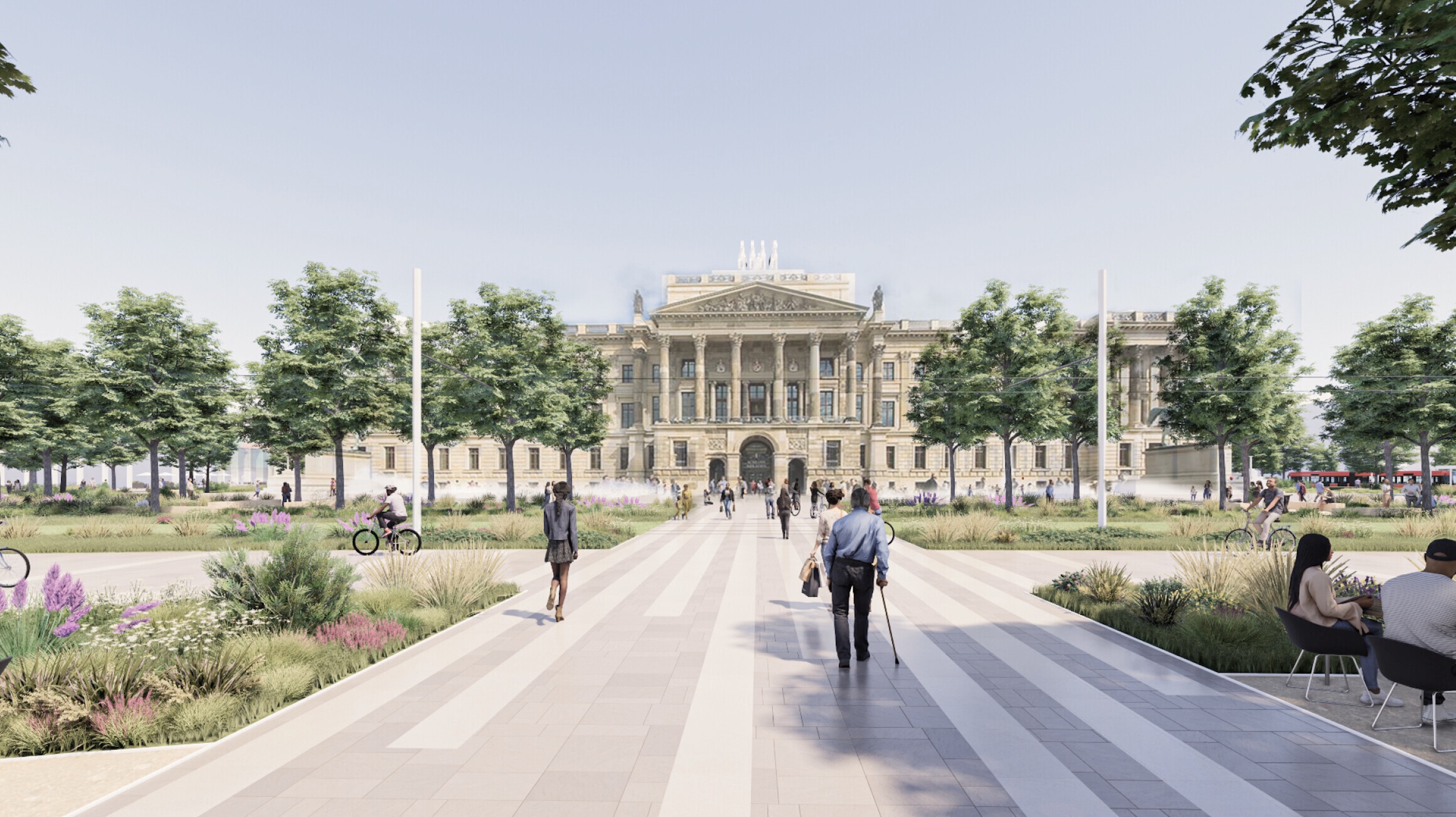
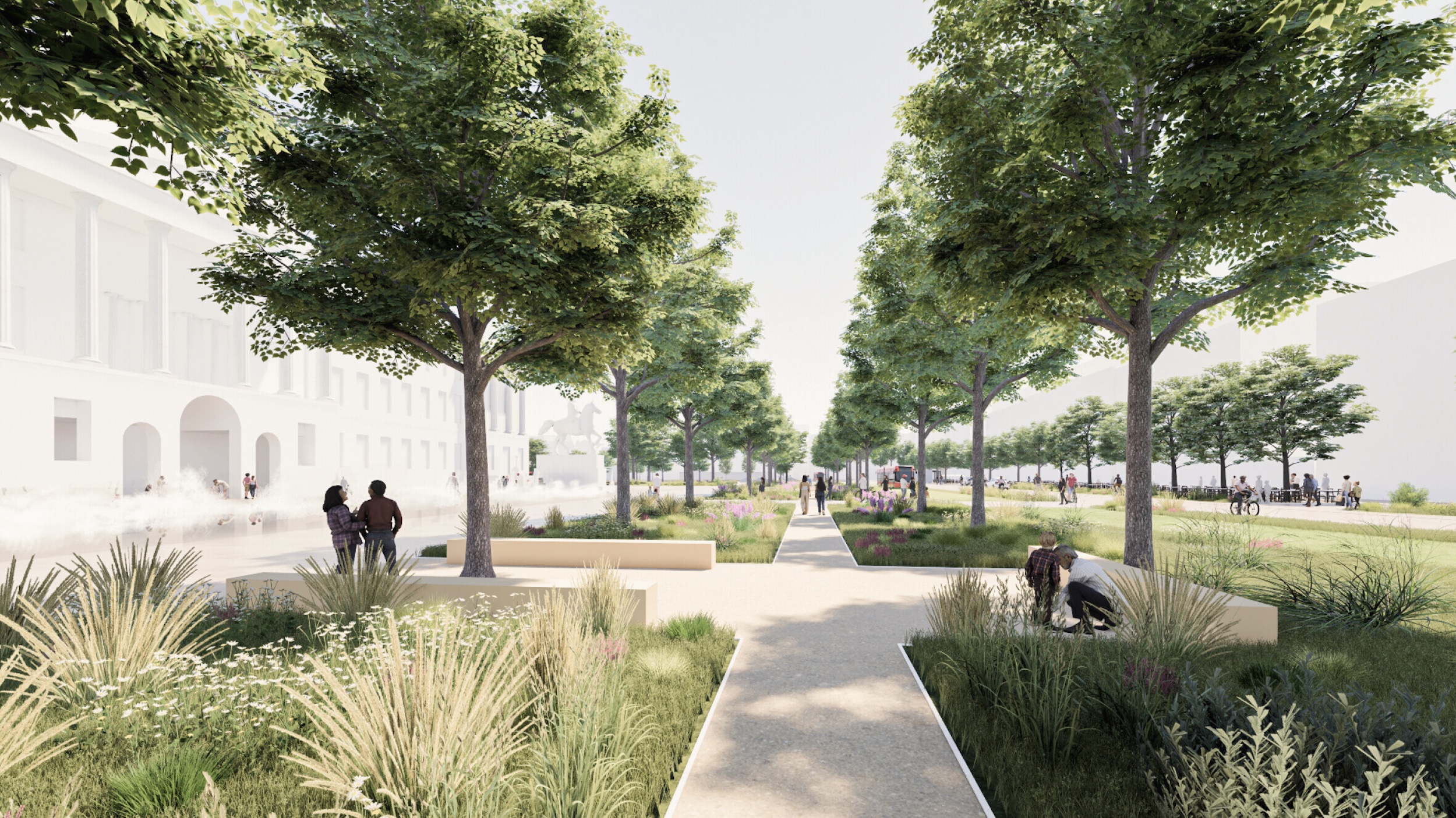
The design therefore aims to reorganise this important inner-city area spatially, functionally and atmospherically. Under the guiding principle of “Opening up, Connecting, Greening”, the previously fragmented traffic area is transformed into a coherent urban fabric of squares and open spaces. Private motorised traffic is significantly reduced and, in accordance with the shared-space principle, relocated to the west side of Bohlweg with one lane in each direction; the area around the Ritterbrunnen is freed from through traffic. New pedestrian links, level-paved street spaces and bright, accent-paved strips running east-west strengthen the visual and functional connection between the city centre, Schlossplatz and the Magniviertel. Pocket parks in the north and south, greened recreational areas and outdoor dining amidst the greenery enhance the quality of the environment and make the Magniviertel visible and experienceable once again.

The restoration of the historic Ackerhof gateway and the creation of an attractive pedestrian link between the Magniviertel and the Schloss-Arkaden will reinforce the historic connection between these areas and re-establish links within the urban fabric. The restoration is to be financed through the sale of Horten tiles to the public and, as a community-supported project, will be firmly embedded within the local community.
Urban Development and Building Construction

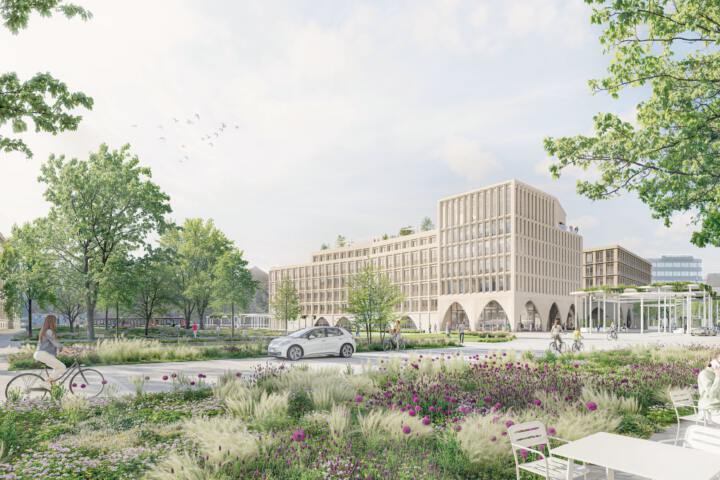
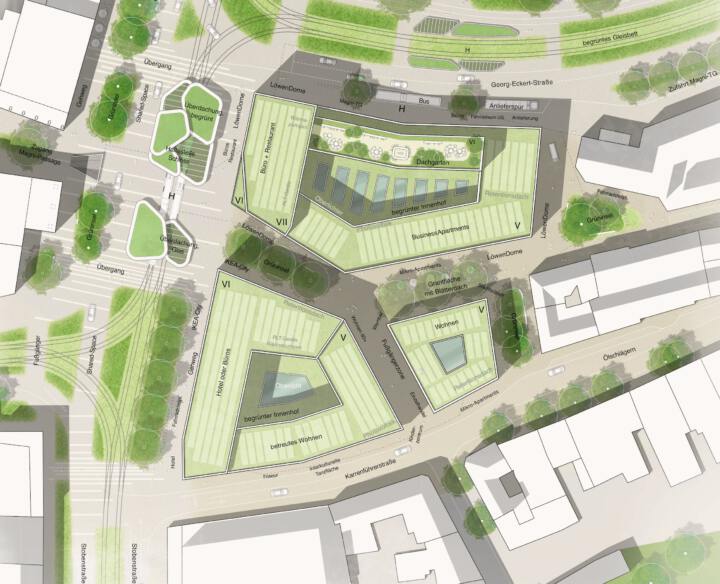
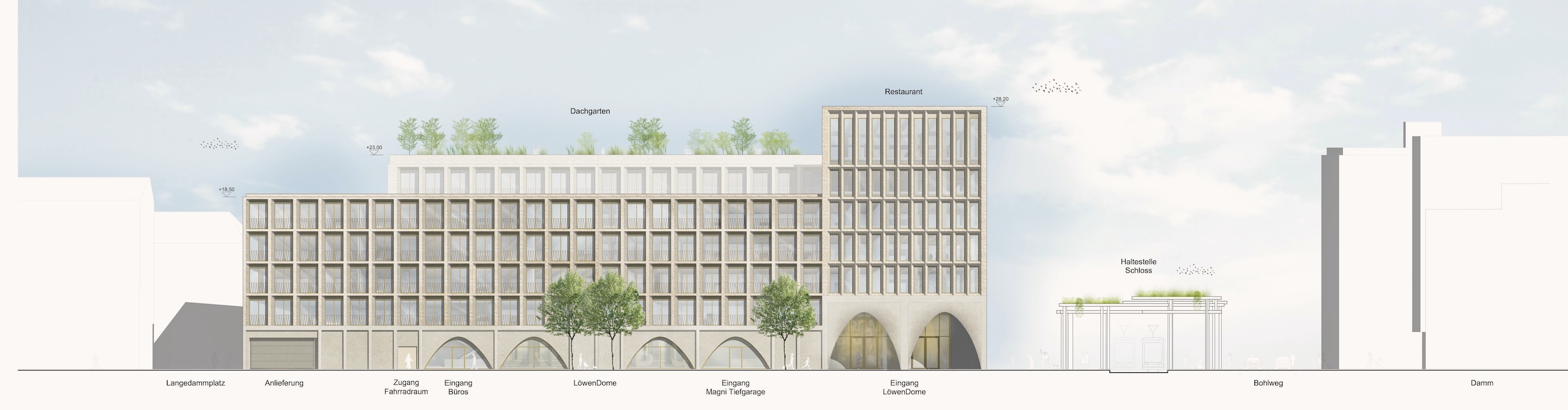
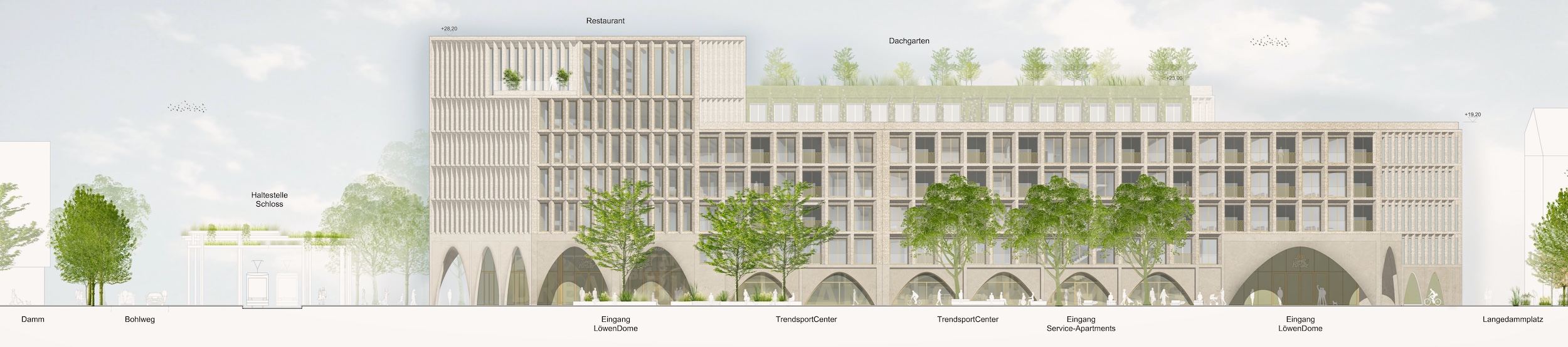
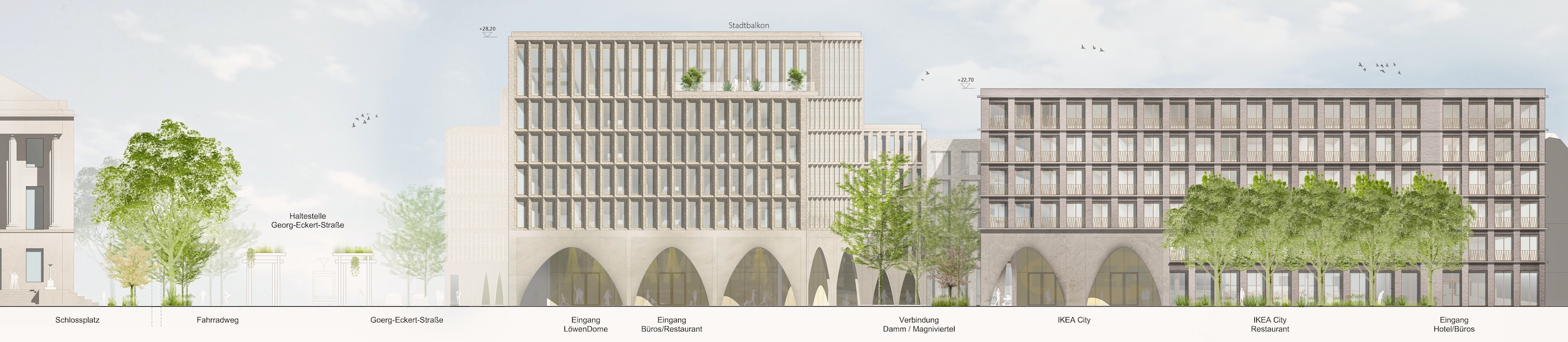
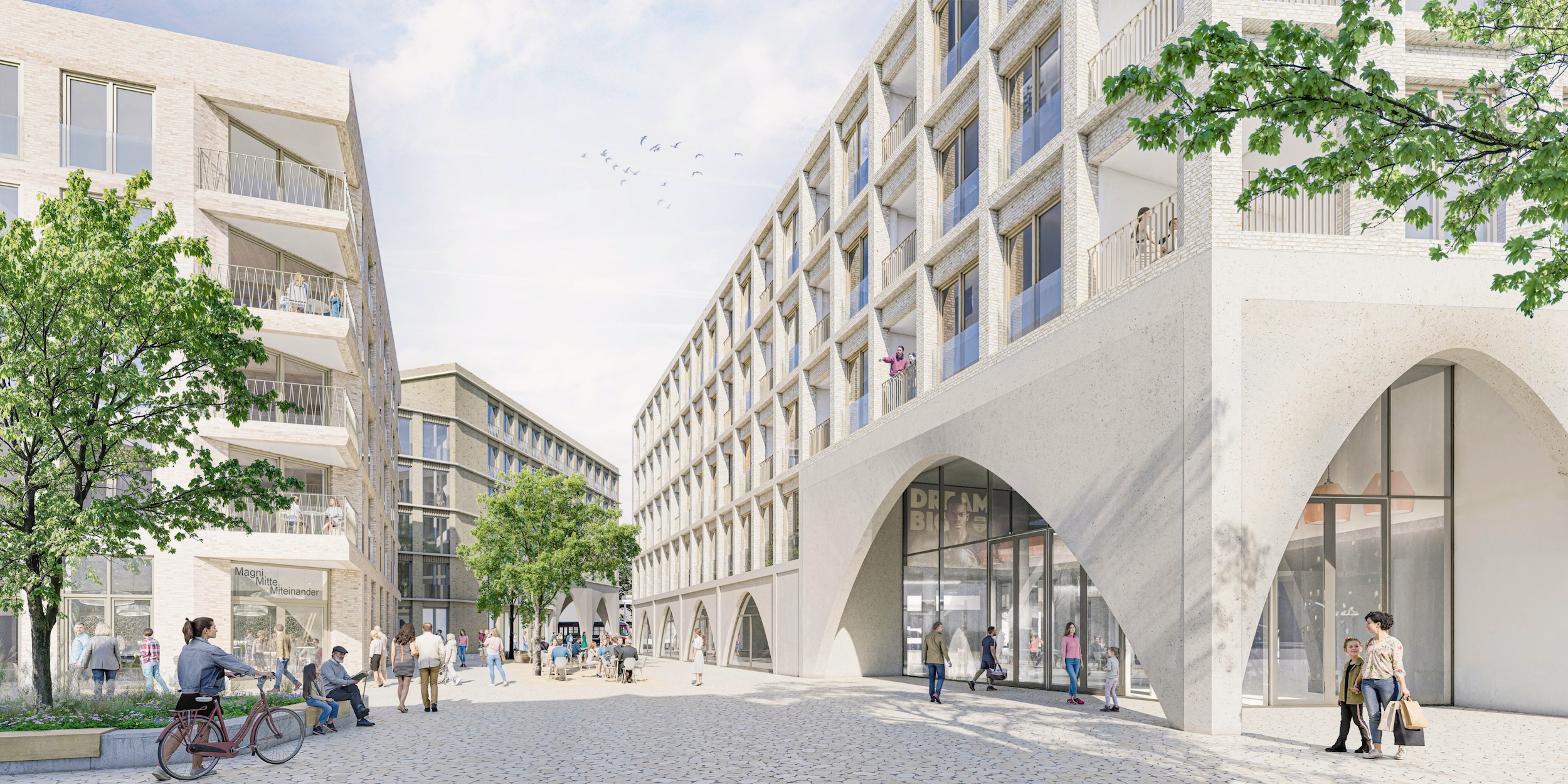
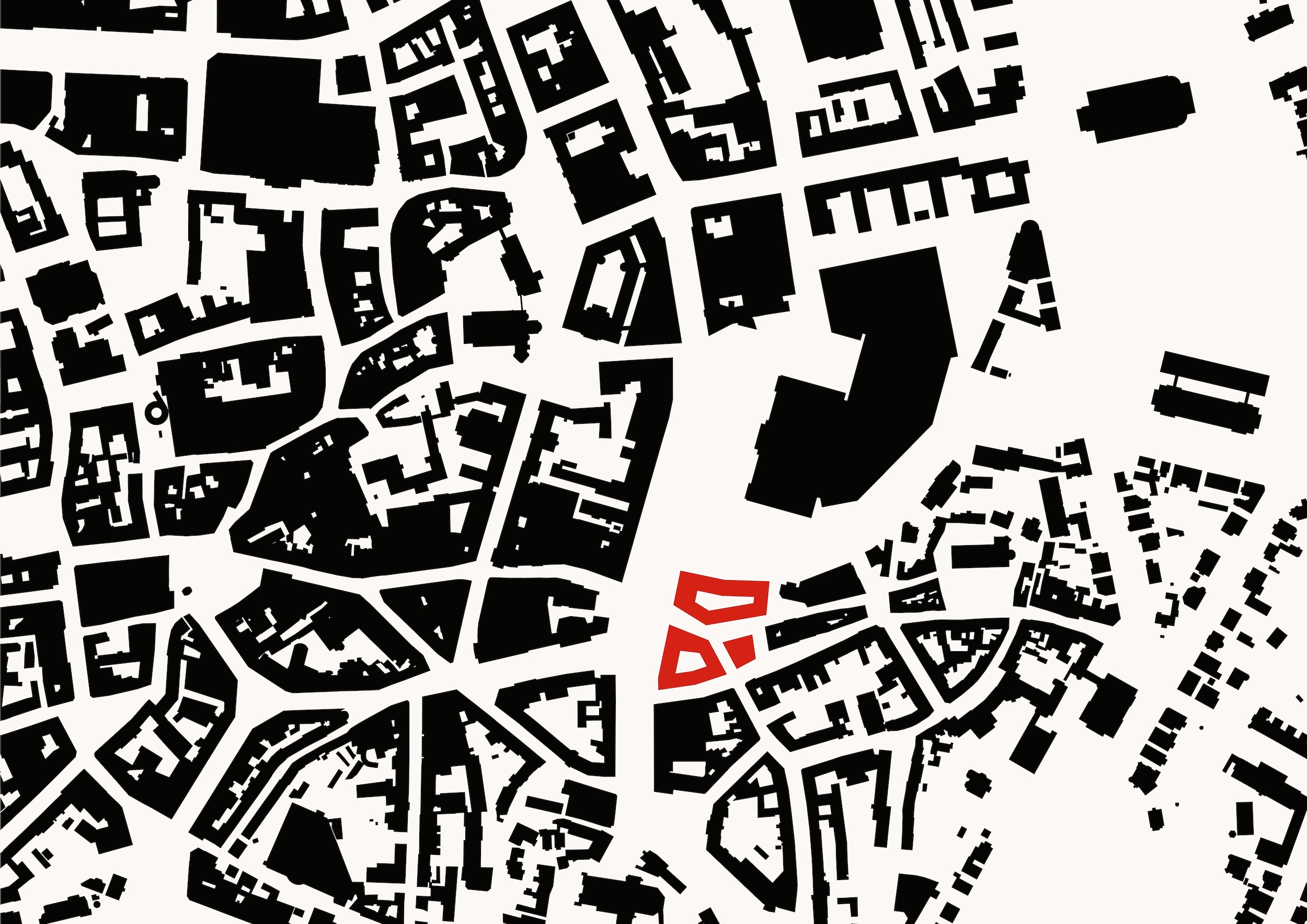
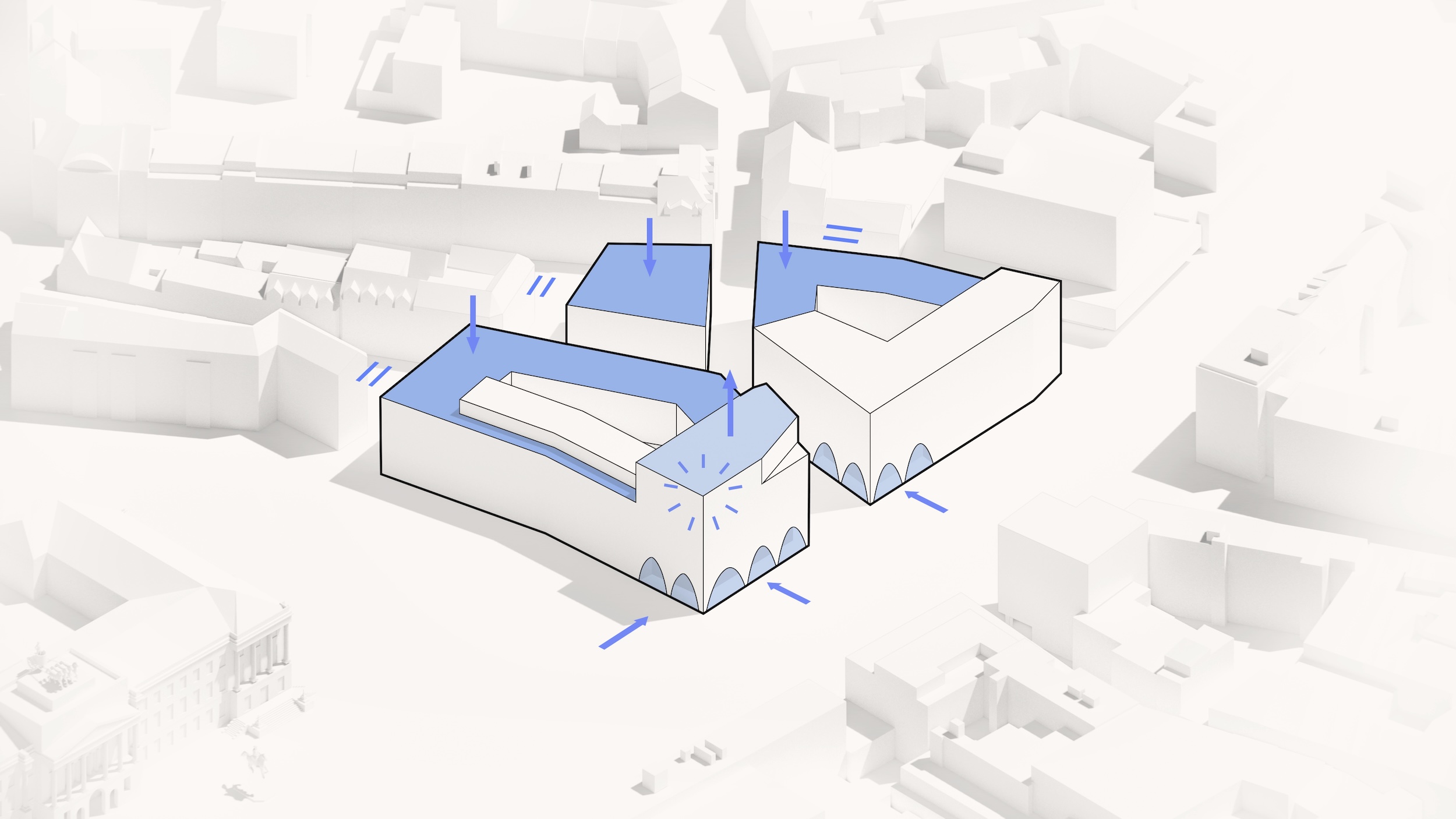
The design envisages three distinct building volumes of varying scales, which incorporate historical pathways and create a new hub between the city centre and the Magniviertel. Within the urban context, the buildings are staggered in height, ranging from up to seven storeys at the north-west corner facing Schlossplatz down to five storeys across the Magniviertel, and enclose two small new urban squares that act as transitional spaces connecting to the neighbourhood.
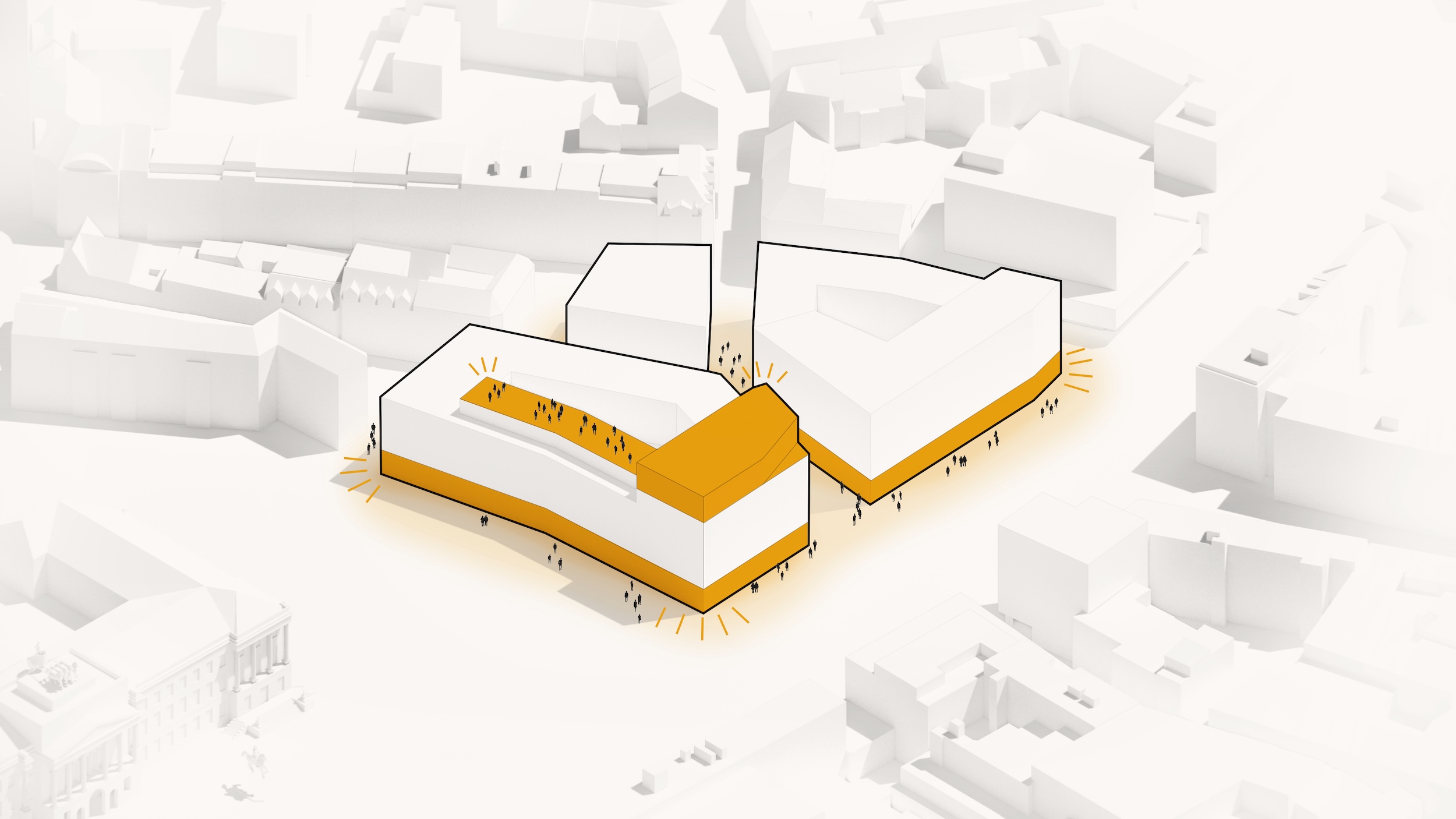
The ground-floor areas will be brought to life with two large public-facing spaces and a range of smaller-scale uses. The plan includes retail outlets, small-scale catering facilities, social and cultural institutions, services, and neighbourhood-specific amenities that create a vibrant and appropriately scaled transition to the small-scale structure of the Magniviertel. High-traffic attractions in the north include the “LöwenDome” as a trendy sports centre spanning the ground floor and first floor – linked to the idea of incorporating Dennis Schröder as a key figure – and, in the south-western building, the entrance to an IKEA City with a complementary market hall on the first basement level.

The upper floors will feature a varied mix of uses, including offices, a hotel, residential units, micro-apartments and business apartments, as well as sheltered housing. The facades facing the embankment and Georg-Eckert-Straße, which are subject to higher noise levels, will be used predominantly for commercial purposes, whilst residential units are situated on the quieter sides of the building. The smallest building connects to the Magniviertel and houses family-friendly flats. A restaurant on the sixth floor, featuring a lush roof garden and a city balcony, forms a special urban attraction with views over Schlossplatz and the city centre.

Access and Mobility

Proven elements of the existing access network will be retained and integrated into the new neighbourhood. These include, in particular, the connection to the Magni underground car park on the lower ground floor, as well as the existing pedestrian tunnel from the Damm, which will be modernised in terms of design and upgraded functionally. Access to the IKEA market hall on the first basement level will be provided via both the ground floor and the former Horten tunnel, thus ensuring optimal links to the city centre, public transport and the existing underground car park infrastructure.
The second basement level will accommodate around 140 car parking spaces for residents, the hotel, offices and commercial premises. In addition, a central bicycle storage area with around 230 spaces in double-parking systems is being created to the north, accessed via a lift on Georg-Eckert-Straße and conveniently reachable from all buildings via the second basement level. A further 150 or so public bicycle parking spaces will be provided in the outdoor area. A new lift and staircase system, accessible from the outside, will also enable barrier-free access to the Magni underground car park around the clock.

Tram stop and public space

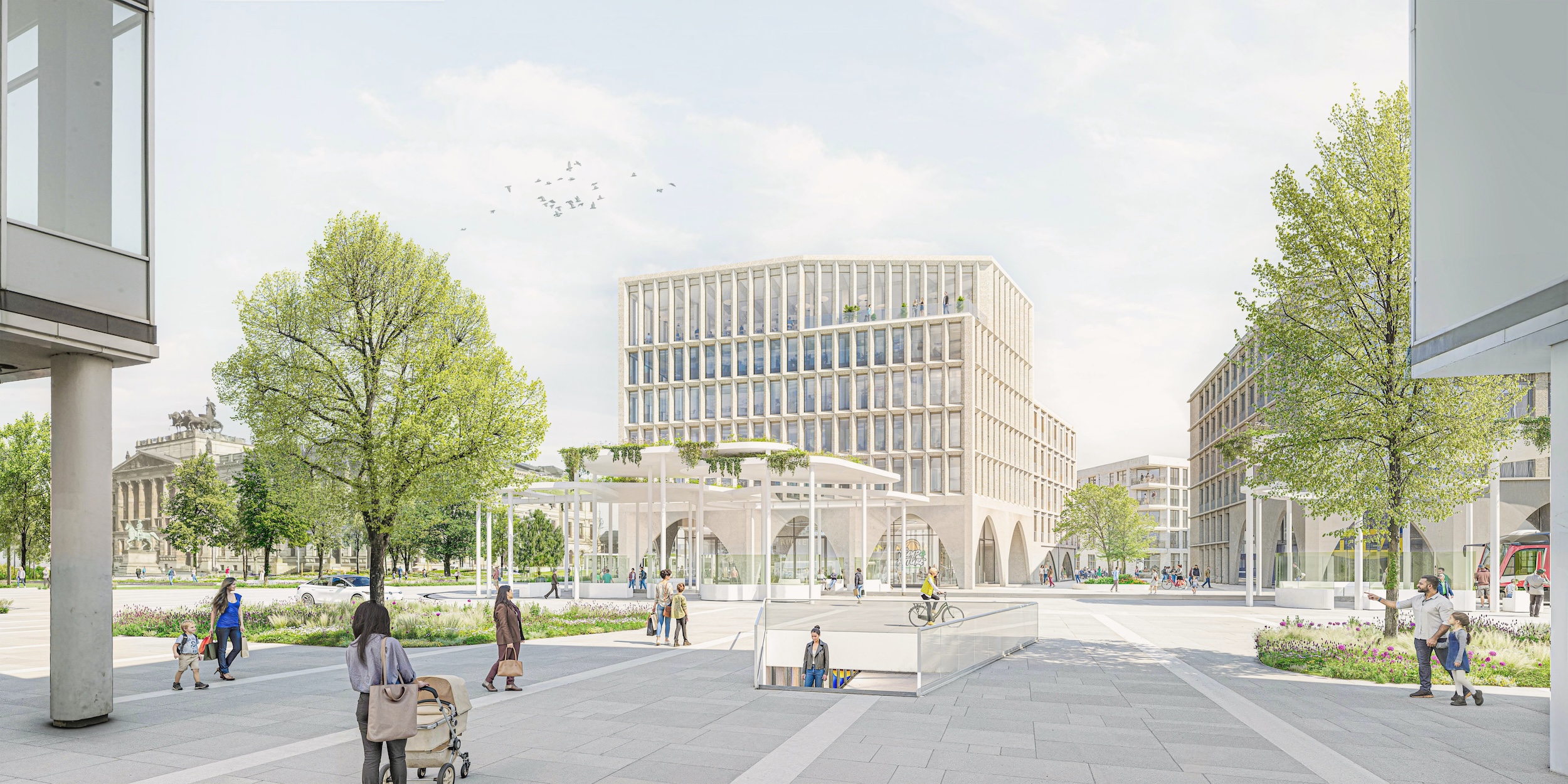
The ‘Schloss’ tram stop is being redesigned to be transparent and delicate. A deliberate break in the canopy along the line of sight between Damm and the Magniviertel enhances visual permeability and highlights the new pedestrian link. With the removal of the eastern lanes, the eastern part of the stop will in future be directly and safely connected to the neighbourhood, without the need to cross any additional roadways.

Construction Phases – Urban Development and Open Space

The new district will be realised in three coordinated construction phases, which will gradually reorganise the urban structure and open space, bringing them to life. In this way, the project will develop into a new urban centre in clearly defined stages and can be completed in time for Braunschweig’s 1,000th anniversary in 2031.

In the first construction phase, running until 2028, the new urban boundary facing Schlossplatz will be formed by the construction of the northern building block. At the same time, the single-storey inner courtyard of the south-western building block will be created. By reusing the distinctive Horten tiles, the temporary structure will take on a temporary design that fosters a sense of identity and will enable the attractive development of the uses on the first basement level at an early stage. To visually re-establish historical pathways, the ground areas of the future buildings will be laid out as green meadows, making the future neighbourhood structure visible within the urban space. At the same time, the ‘Schloss’ stop is being refurbished. The traffic areas are being paved at ground level, creating a cohesive urban space. During the transitional period, traffic on the east side of the stop – with a reduced lane – will still be able to travel northwards, albeit with traffic calming measures already in place.

During the second construction phase, running until 2030, the key urban design and open-space planning features will be implemented. The road at Ritterbrunnen will be removed to make way for a shaded, green pedestrian area. Misting systems will enhance the quality of the environment during the summer months. To the north, a car-free city park with a high quality of stay is being created, whilst to the south a green pocket park complements the open space provision. Along Bohlweg, a green buffer zone forms a pleasant transition between outdoor dining areas and the traffic zone.

The overall project will be completed in the third construction phase by 2031. The third building complex complements the neighbourhood and completes the spatial framework of the new urban squares. At the same time, sections of Georg-Eckert-Straße will be converted into cycle paths and greened, whilst private motorised traffic will be further reduced.

Vision for the future from 2035 onwards

Looking ahead to 2035, the aim is to transform Bohlweg into a largely car-free urban space. The street space will evolve from a traffic-dominated infrastructure into an urban space for recreation and movement, with a clear prioritisation of sustainable forms of mobility. In future, its use will be reserved primarily for local public transport and cycling.

Roof garden and city balcony

Adjacent to the restaurant, a lush green roof landscape is being created as a high-quality urban open space. Seating areas, an outdoor bar, trees and viewing points offer a variety of ways to spend time whilst enjoying views over the city. This is complemented by a city balcony, which provides a special place to relax and observe the hustle and bustle of city life.

Lighting, flexibility and use

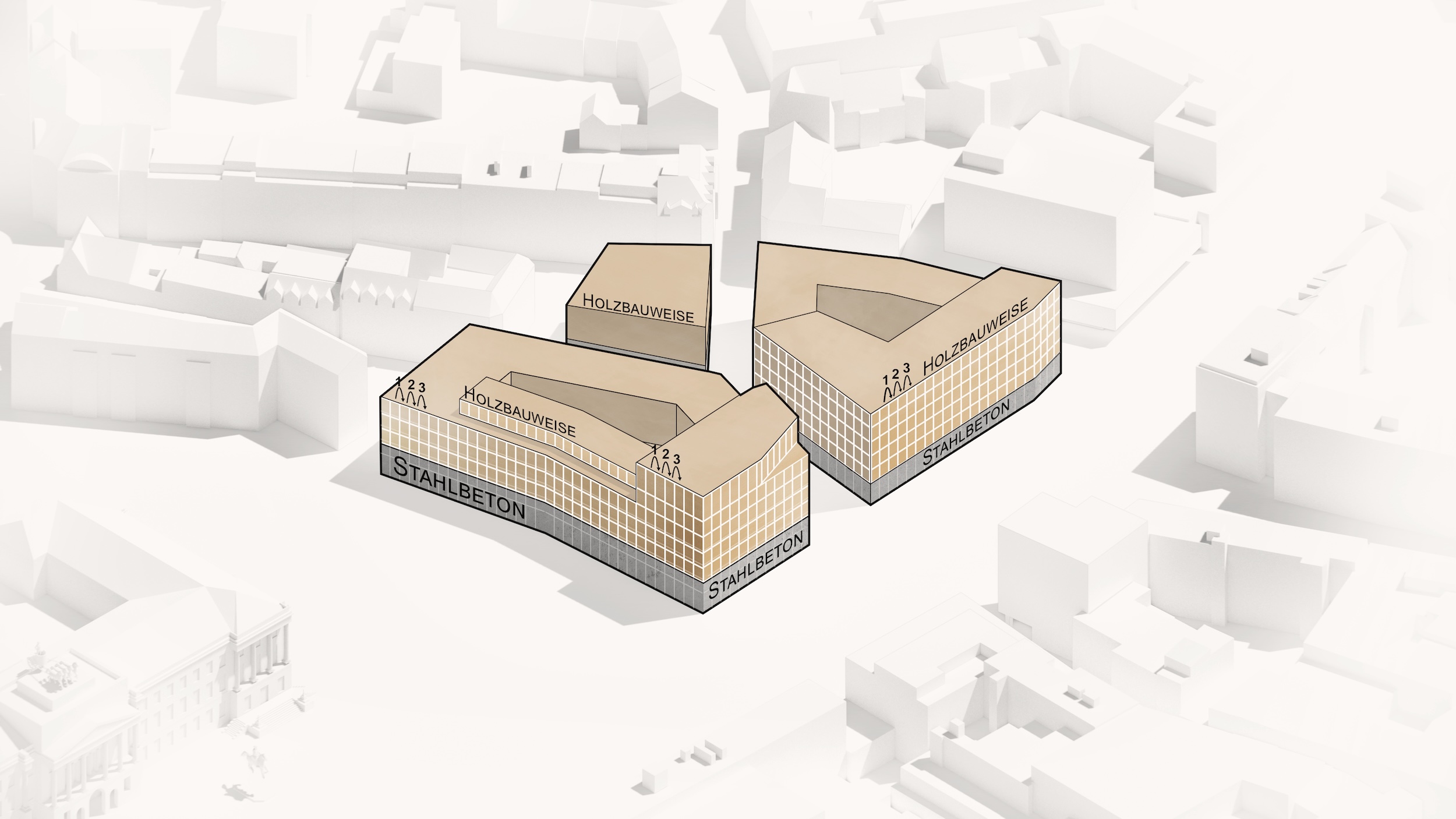
Despite having a comparable gross floor area to the existing property, the new building triples the illuminated façade area. This creates bright, flexible spatial structures offering a high quality of life and work. The mix of uses within the quarter is deliberately heterogeneous to enable a long-term response to varying requirements. Major crowd-pullers such as the “LöwenDome” and IKEA City are complemented by smaller-scale offerings that create a vibrant transition to the Magniviertel. Housing options for different user groups – including families, senior citizens and mobile professional groups – round off the concept and reinterpret urban living in the spirit of a vibrant, mixed-use neighbourhood of the 21st century.