
3rd Prize | Westerwischstrom neighbourhood
Cuxhaven
In collaboration with Thomas Schüler Architekten und Stadtplaner
Urban development concept
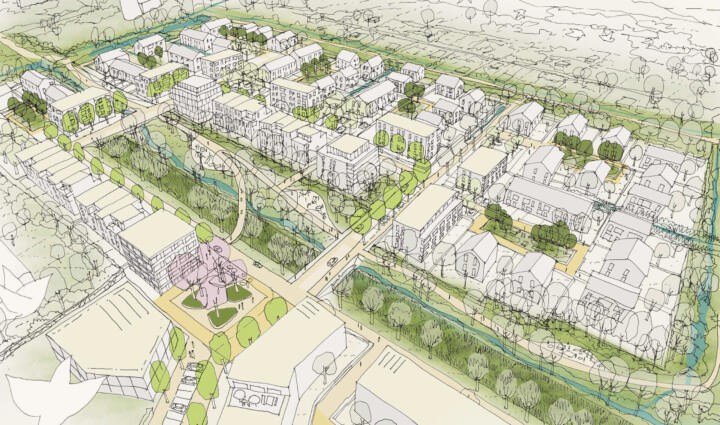
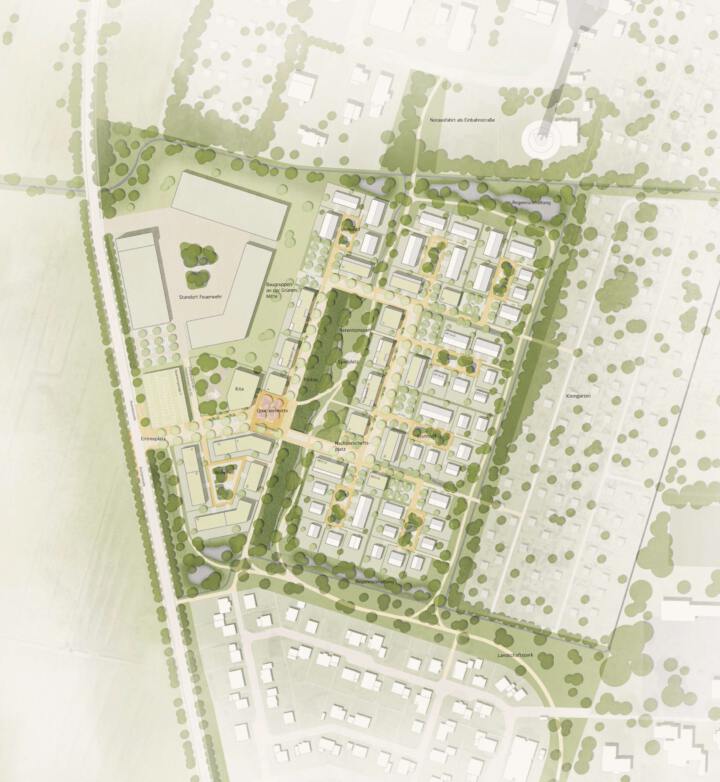
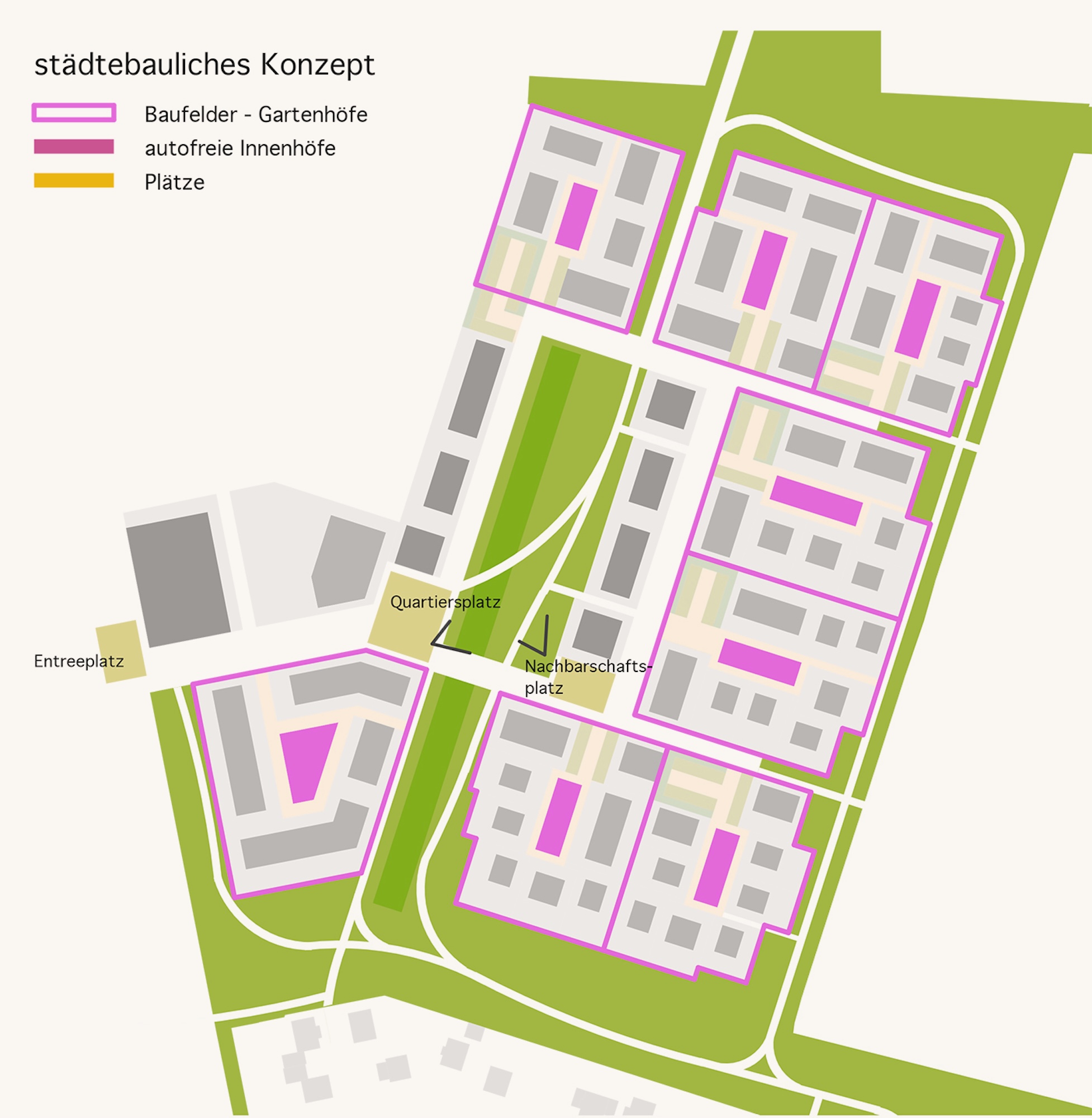
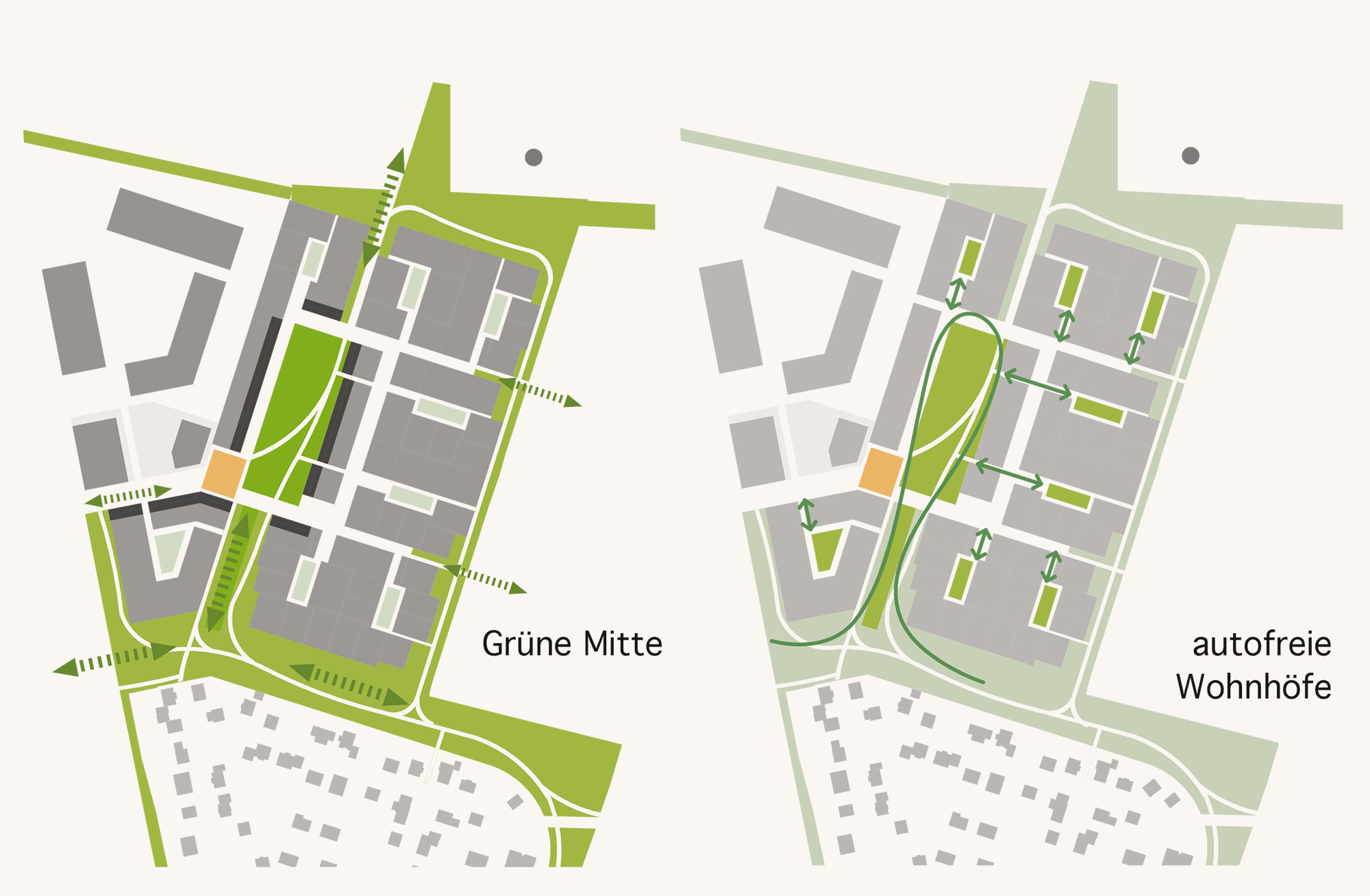
Due to its existing island location, the new neighbourhood needs a neighbourly structure in order to create an identity here in the future. A village green will be created as a central open space element, forming a communal interior area as a ‘green heart’ to which all building plots are adjacent and from which they derive their addresses.
The village green connects with the landscape areas, in particular the southern green corridor and the Süderwischschule school, thus creating a coherent open space framework. The individual building plots, which give the green centre its spatial edges, arise naturally from these path axes.
The biotope area of the reed strip is preserved and given a sufficient buffer strip. It becomes the new open space theme of the green centre and strengthens the function of a retention meadow.
Quarter centre
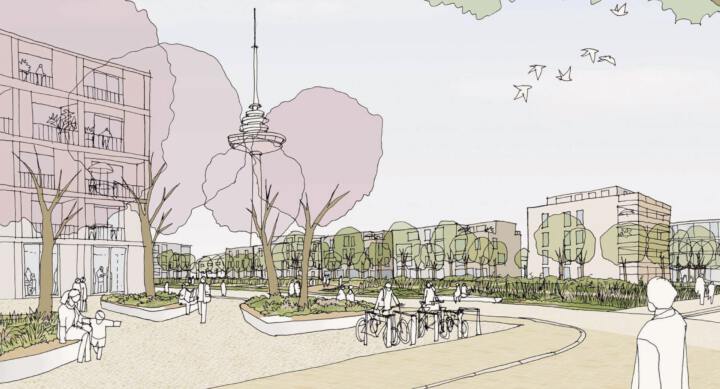
Directly opposite Theodor-Heuss-Allee, a centrally located neighbourhood square is being created as a representative gateway to the new quarter. It opens up like a window onto the retention meadow and forms a central hub here. As an urban square, it allows for a wide range of uses and integrates central play and activity areas. Large benches and seating steps invite visitors to linger and create a pleasant atmosphere with a view across the Retentionsanger.
The structural centrepiece is the daycare centre, which, together with a bakery or a small village shop in the adjacent neighbourhood house, will enliven the square. The upper floors could be used for special types of housing, such as multi-generational housing or senior living.
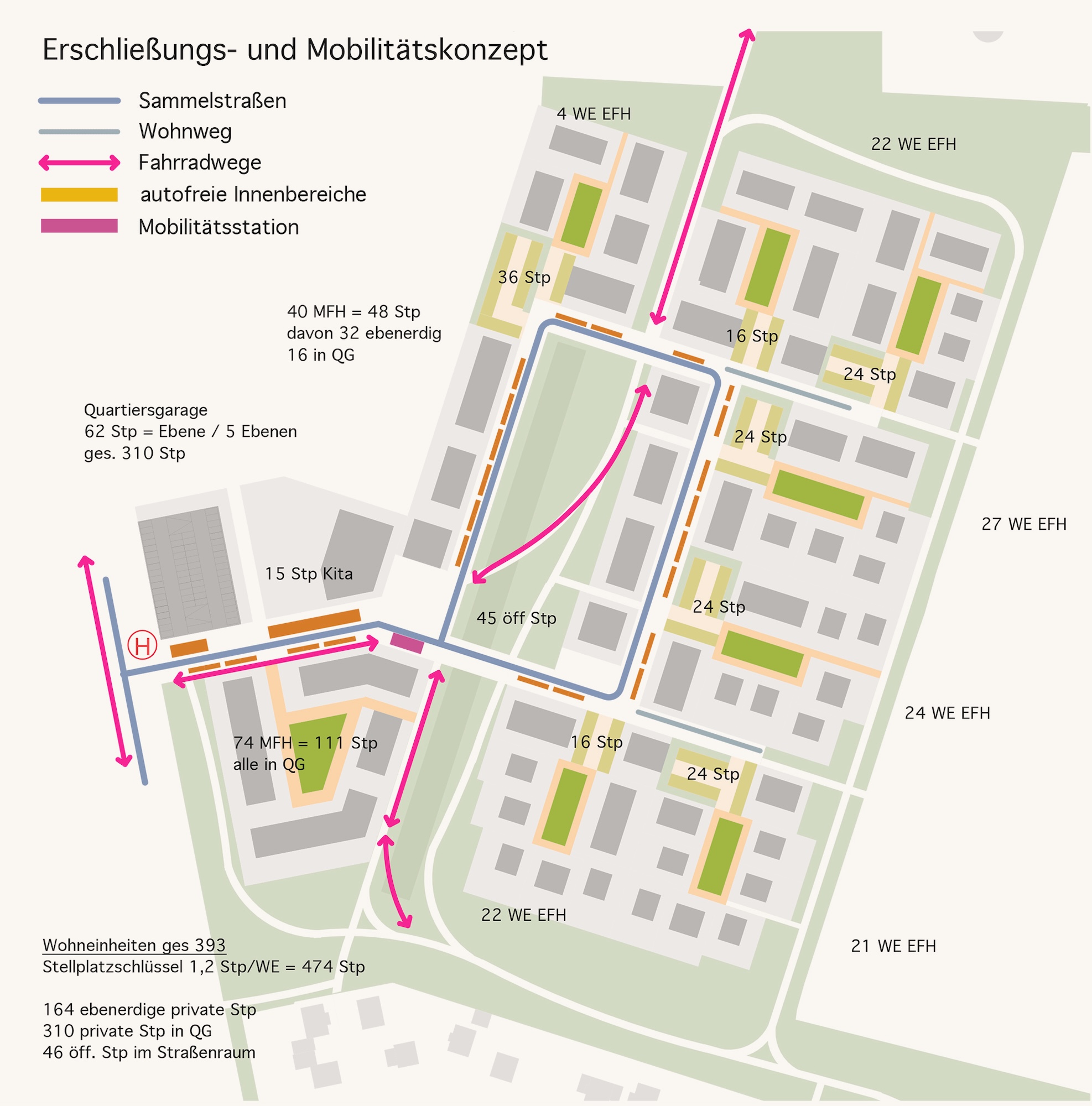
The forecourt along the district road is integrated into the new sequence of squares as an open space and forms the entrance to the new neighbourhood. This is where the public transport stop and the neighbourhood car park are located, which also serves as a structural noise barrier.
Garden courtyards at the Green Centre
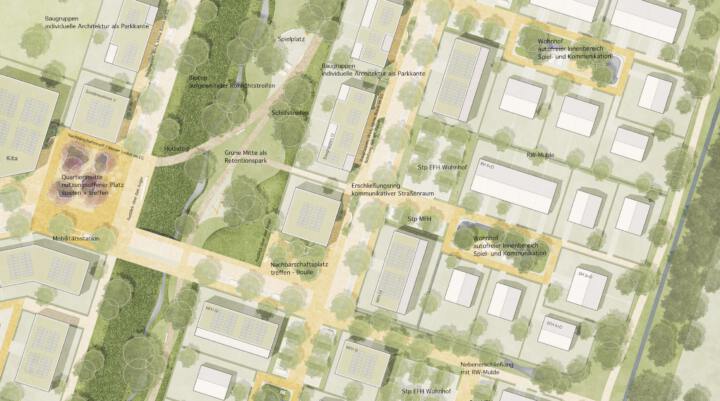
The modular concept of garden courtyards forms small neighbourhoods that can be developed with different types of buildings for single-family homes and multi-family homes with a focus on family-friendly and communal living. They are grouped around a garden courtyard with play and communication areas, which strengthens neighbourly coexistence. The building density is highest at the green centre and becomes less dense towards the edges.
The buildings along the green centre are intended for building groups that form a striking park edge with varied architecture through individual development. The ground-floor communal uses and small offices for W+A have easily findable addresses and enliven the public space.
Traffic-free residential environment
The neighbourhood car park is located directly in the access area, providing parking spaces for the western apartment building. The base houses a bicycle parking facility and an energy centre, which supplies the neighbourhood with energy independently as a combined heat and power plant or large heat pump.
The parking spaces for the garden courtyards are located directly at the access areas, keeping the interior areas car-free and creating neighbourhoods with a high quality of life. Understated and well-placed furniture creates a pleasant atmosphere in the public spaces as places for meeting and communication.
Directly on the neighbourhood square is a mobility station that accommodates all functions of ‘soft mobility’ such as car sharing and e-mobility. The footpaths and cycle paths through the green spaces reinforce the permeable internal access concept and promote individual walking and cycling.
Green centre as a retention area
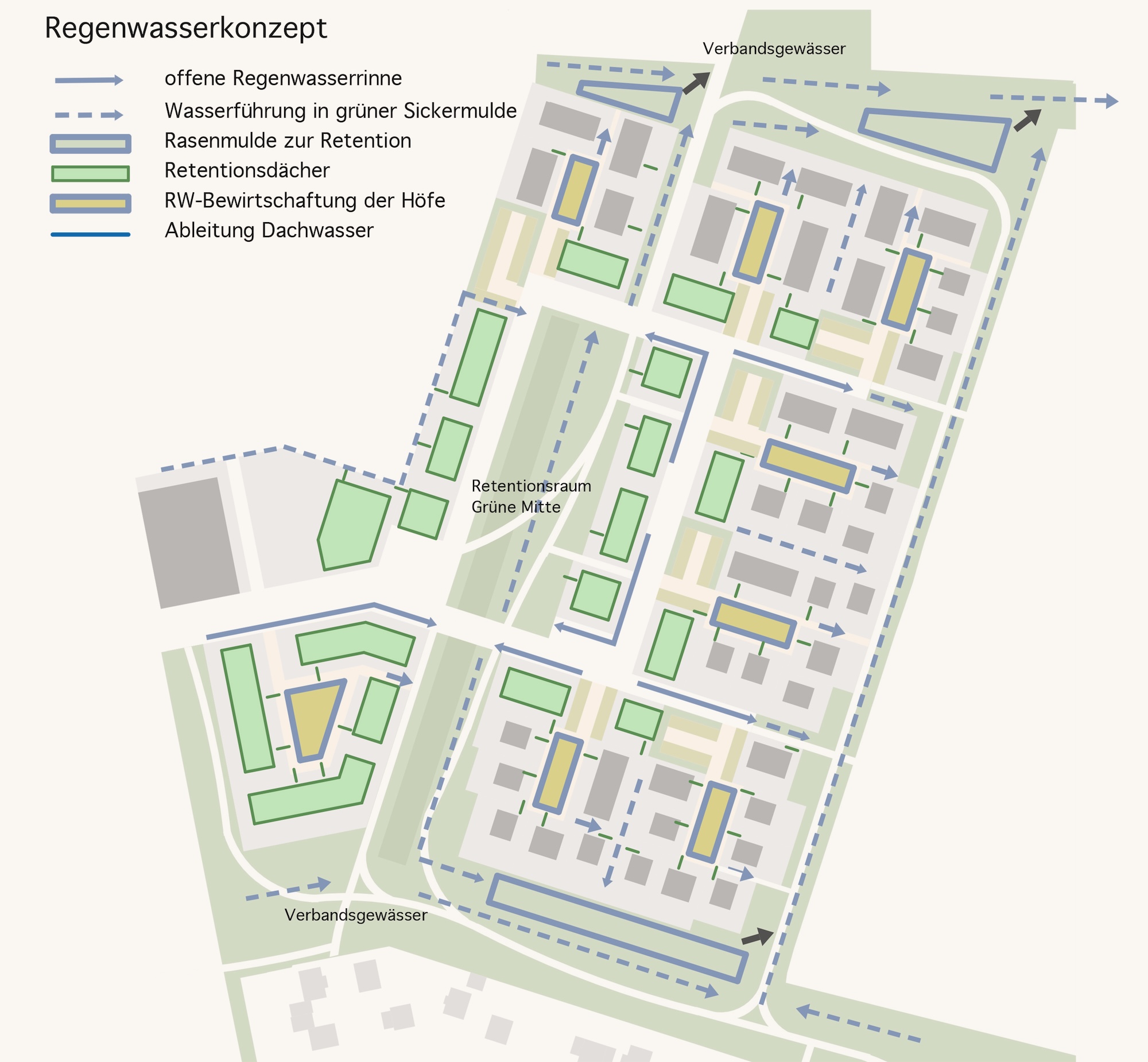
The green centre serves as a large retention area. It is designed to be close to nature and acts as a retention space for rainwater. With its recreational qualities, play facilities and ecological function as a rainwater retention area, it contributes to improving the quality of the neighbourhood and enhancing its identity.
A flat lawn depression parallel to the reed bed strip acts as a central retention area, collecting rainwater from the neighbouring residential courtyards and draining it into the rainwater retention areas to the north and south. The interaction between the reed bed and the extension with intermittently wet retention areas is carefully coordinated with nature conservation requirements in terms of modelling and rainwater supply.
Rainwater and climate impact adaptation concept
The rainwater management concept follows the principles of minimising surface sealing and retaining rainwater runoff at its source so that a large proportion of the water no longer needs to be drained away through evaporation. First, the rainwater from the flat roofs on the construction sites is retained in retention roofs with minimal runoff and an evaporation rate of up to 75%, The rainwater from the gabled roofs and courtyard areas is collected in retention cisterns or led via open seepage ditches and seepage channels close to the surface into the temporarily dammed, lowered areas of the residential courtyards and the lawns and wet meadow hollows along the paths.
The water from the cisterns can be used for grey water utilisation in the buildings and for watering the garden courtyards. Proportional roof greening can contribute to the purification of rainwater and reduce the amount of water accumulating on private areas. The water flows through the garden areas to the central neighbourhood square or directly into the adjacent hollows. Here, the water is retained and discharged in a controlled manner into the adjacent green joints with their associated waterways. The green joints also ensure emergency waterways during heavy rainfall, so that rainwater can be discharged without causing damage.
Particular emphasis is placed on extensive tree planting with climate-resilient species that provide shade and evaporative cooling. In street spaces and squares, they are supplied with water via lowered planting strips and, to a lesser extent, via tree trenches, thus supporting the sponge city concept of the entire neighbourhood. The sowing of species-rich meadows, in combination with bird protection hedges, creates valuable habitats for insects and other animals. In this way, rainwater and climate change adaptation are made visible and tangible as ecological qualities, contributing to the positive image of the neighbourhood.