2nd Prize | New urban spaces for Ortenberg
Ortenberg (Hesse)
In collaboration with Thomas Schüler Architekten und Stadtplaner
The new town centre
Wilhelm-Leuschner-Straße has always been the lifeblood of Ortenberg. This central thoroughfare will be further strengthened in future and enhanced through a new design. In the heart of the town, Ortenberg is being given a new look along Wilhelm-Leuschner-Straße.
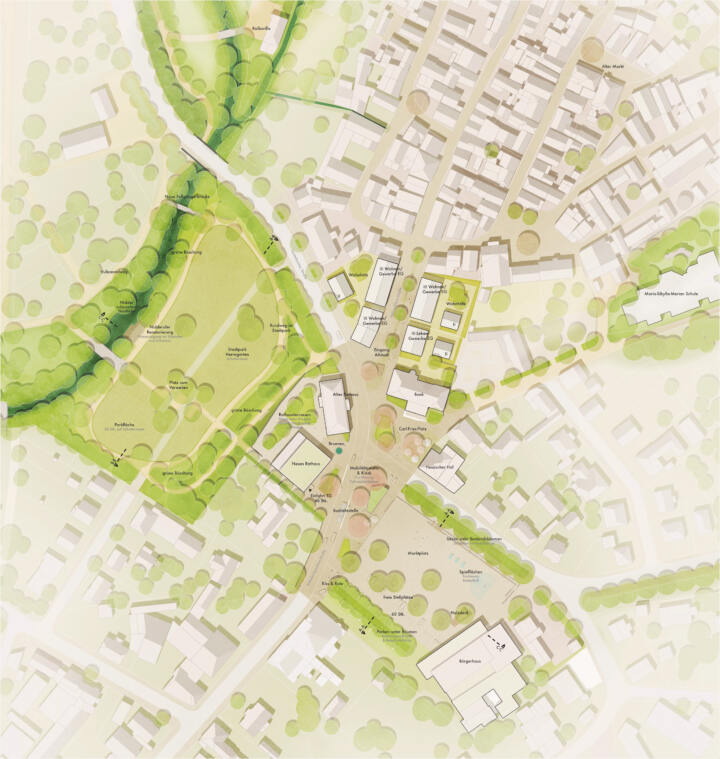
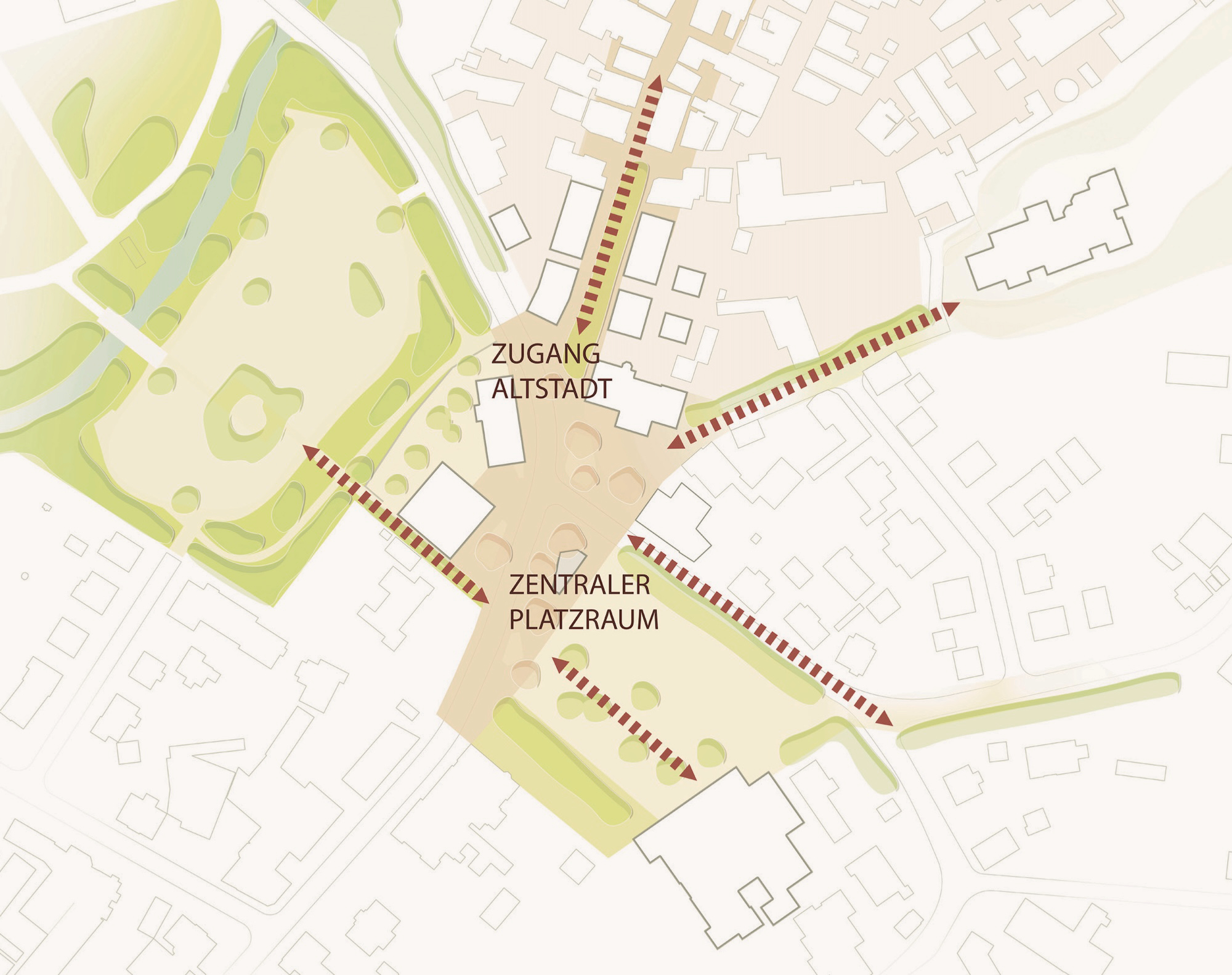
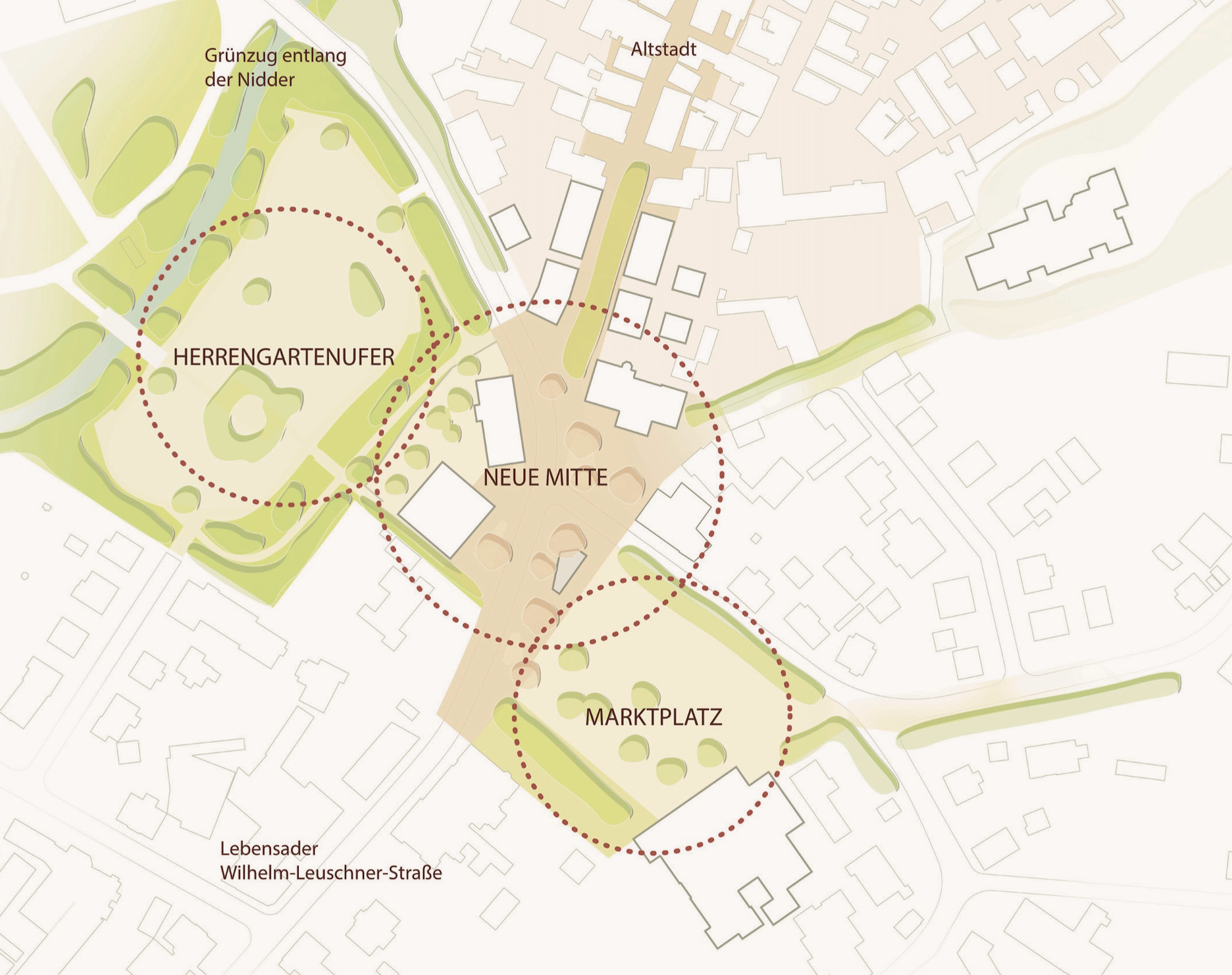
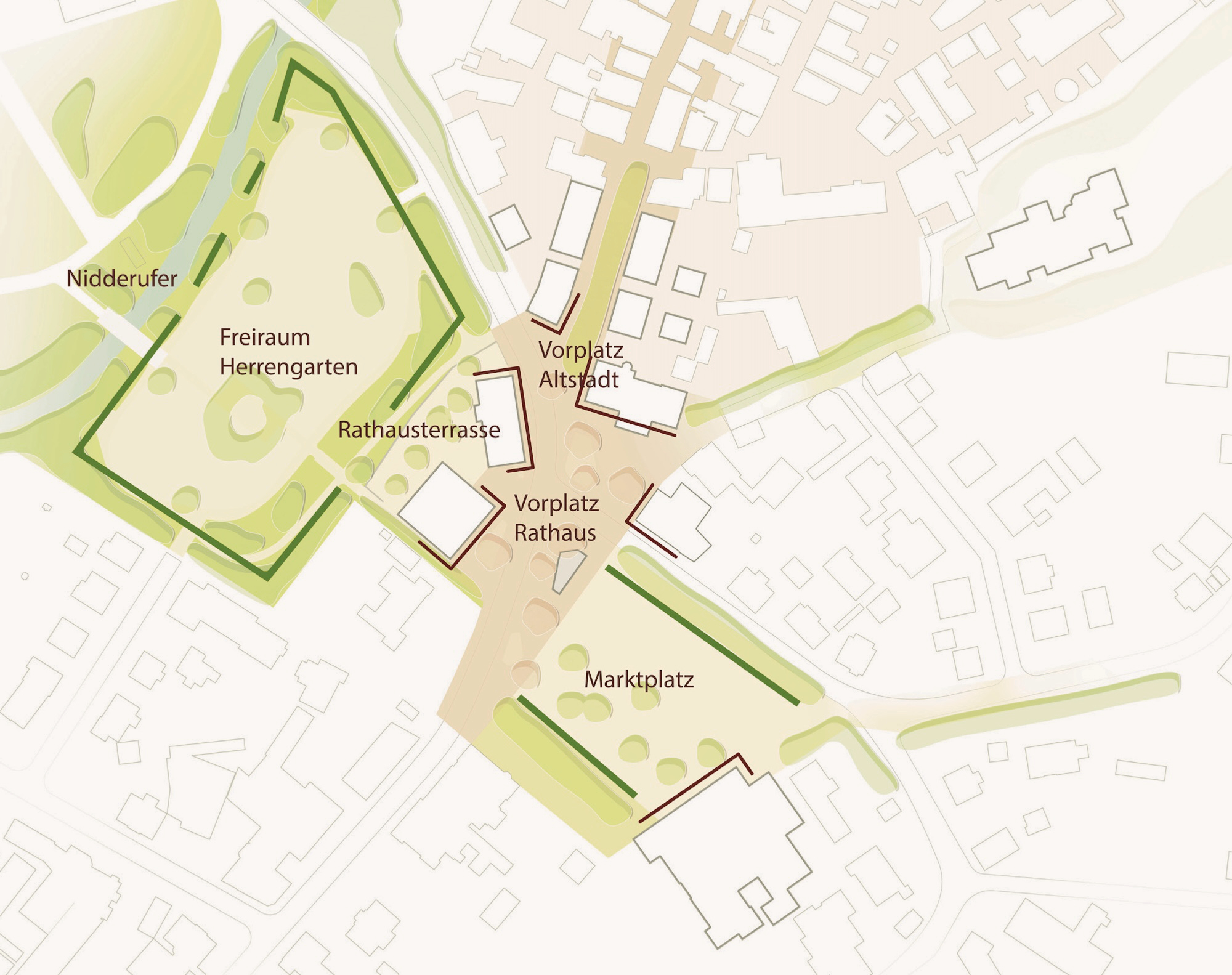
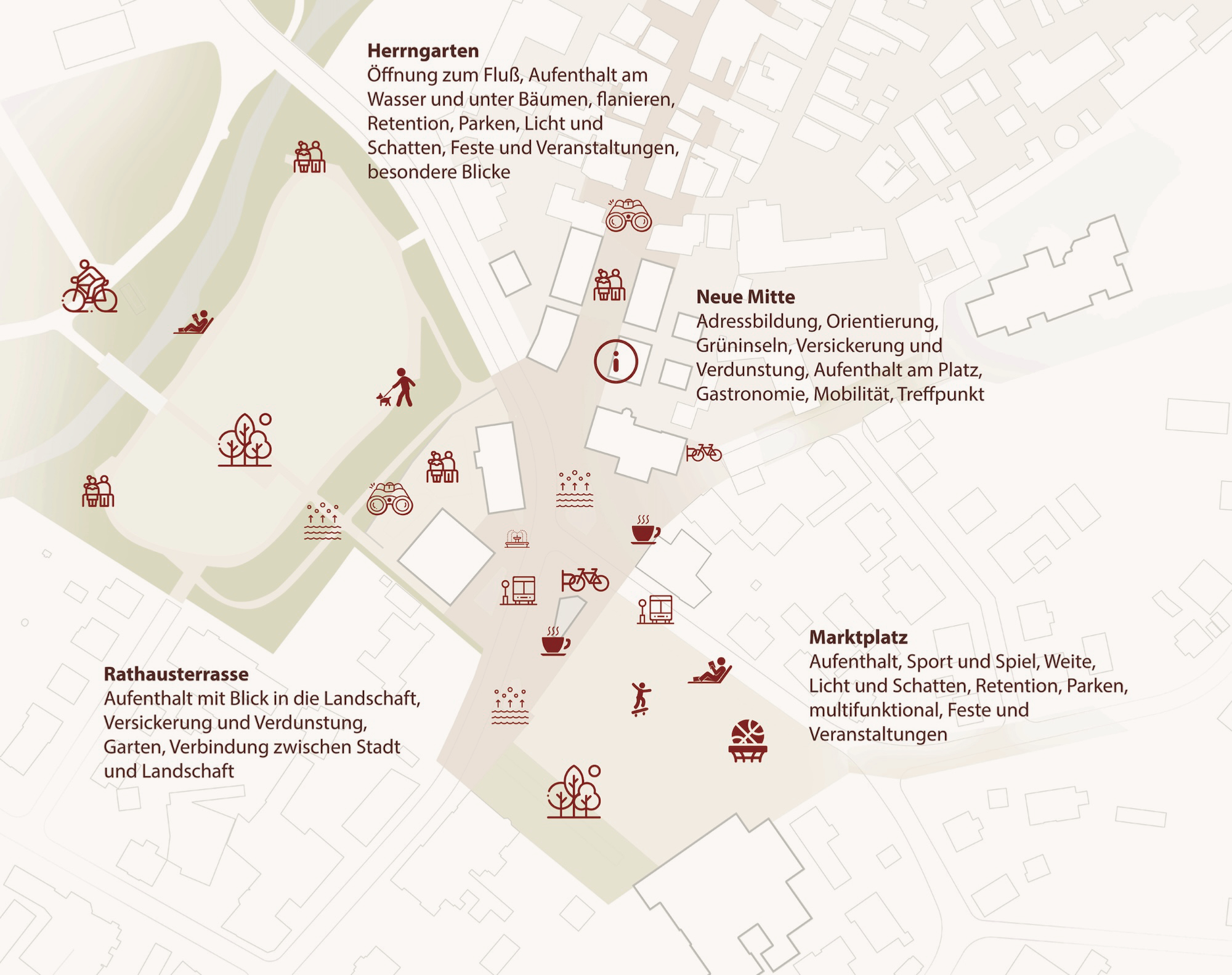
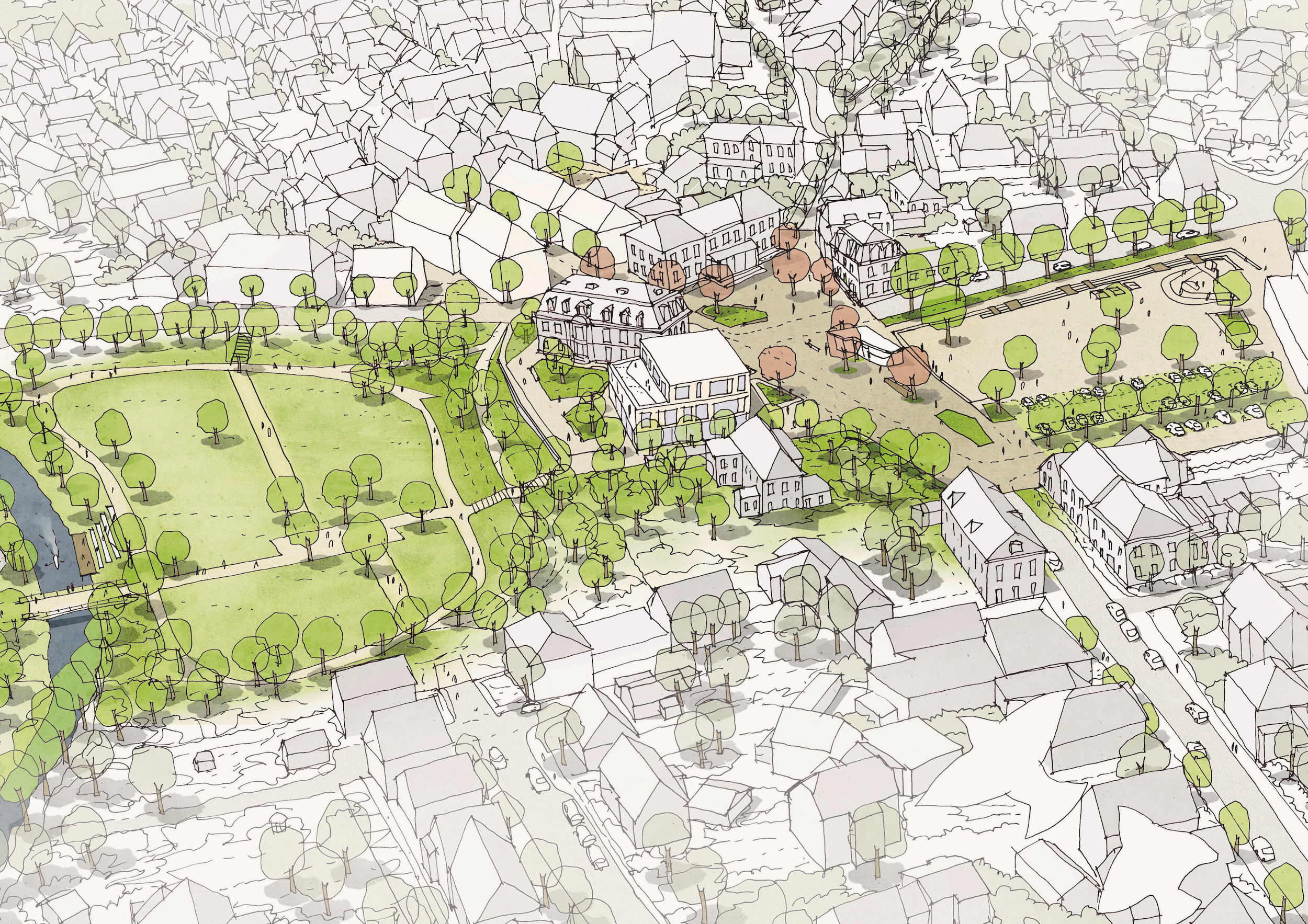
A new central square is being created as a clearly laid-out hub that connects key functions and areas of the town whilst also serving as a new calling card for the town. This square forms the gateway to the historic old town. At the same time, the market square with the community centre and the new town hall are being integrated into the urban and open-space planning.
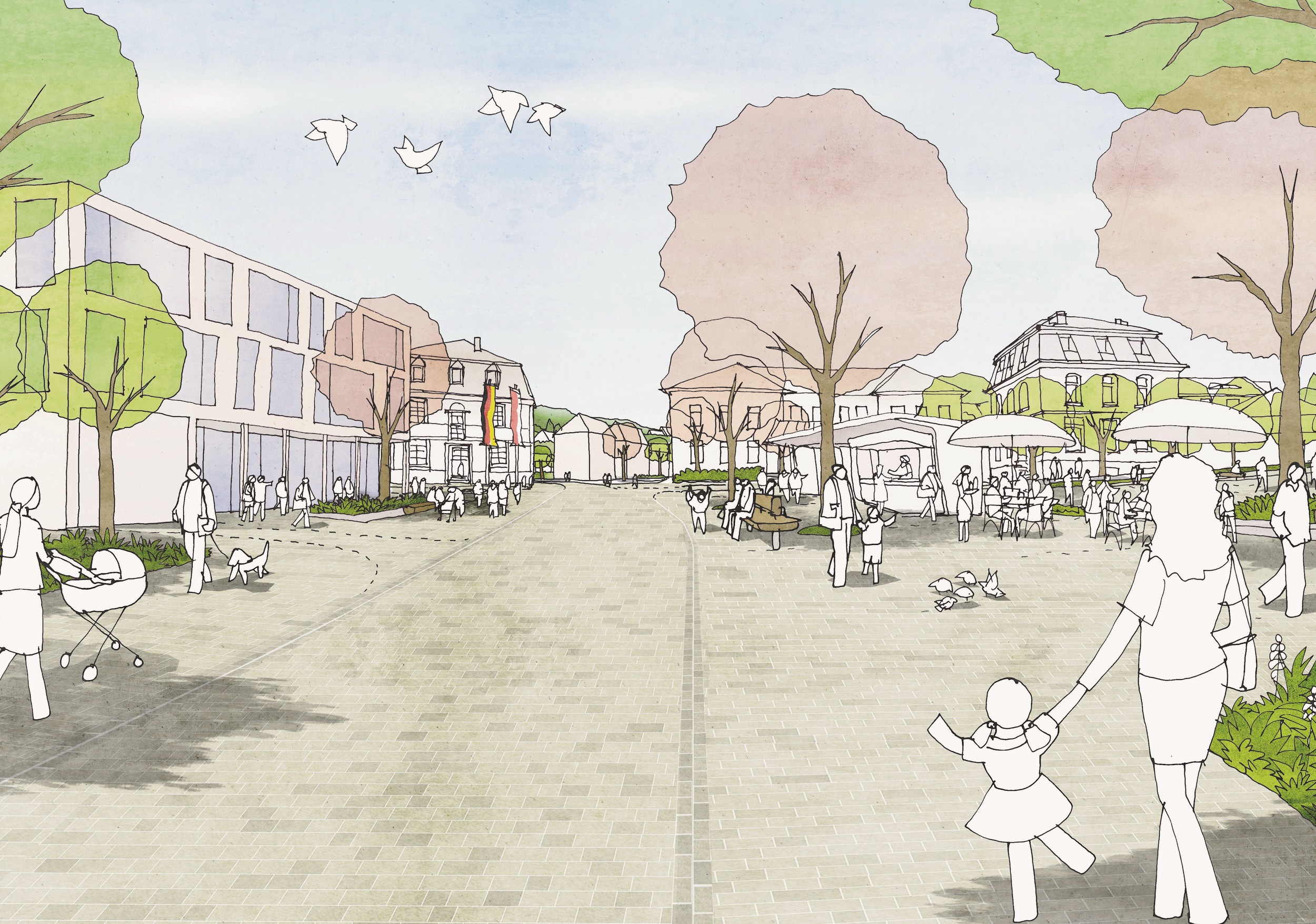
The result is a spacious, multi-purpose town centre in a central location, which, as a space that fosters a sense of identity, creates a representative and communicative urban space. The new buildings complement the existing ensemble of buildings and enliven the square through their diverse uses.
Living in the village centre
New buildings may be constructed in stages on the plots currently still occupied by existing structures along Philipp-Glenz-Straße. These will blend harmoniously into the existing streetscape in terms of their volume and roof shape.
The plans envisage mixed-use buildings comprising residential units and commercial premises on the ground floor. In future, these will form the gateway to the old town and give Wilhelm-Leuschner-Straße a modern look. In the rear areas along Philipp-Glenz-Straße, additional courtyard houses are being built, intended primarily for residential use and creating a quiet, inner residential environment. Green courtyard gardens complement these residential areas and create high-quality, sheltered open spaces offering a pleasant environment in which to spend time.
Transport
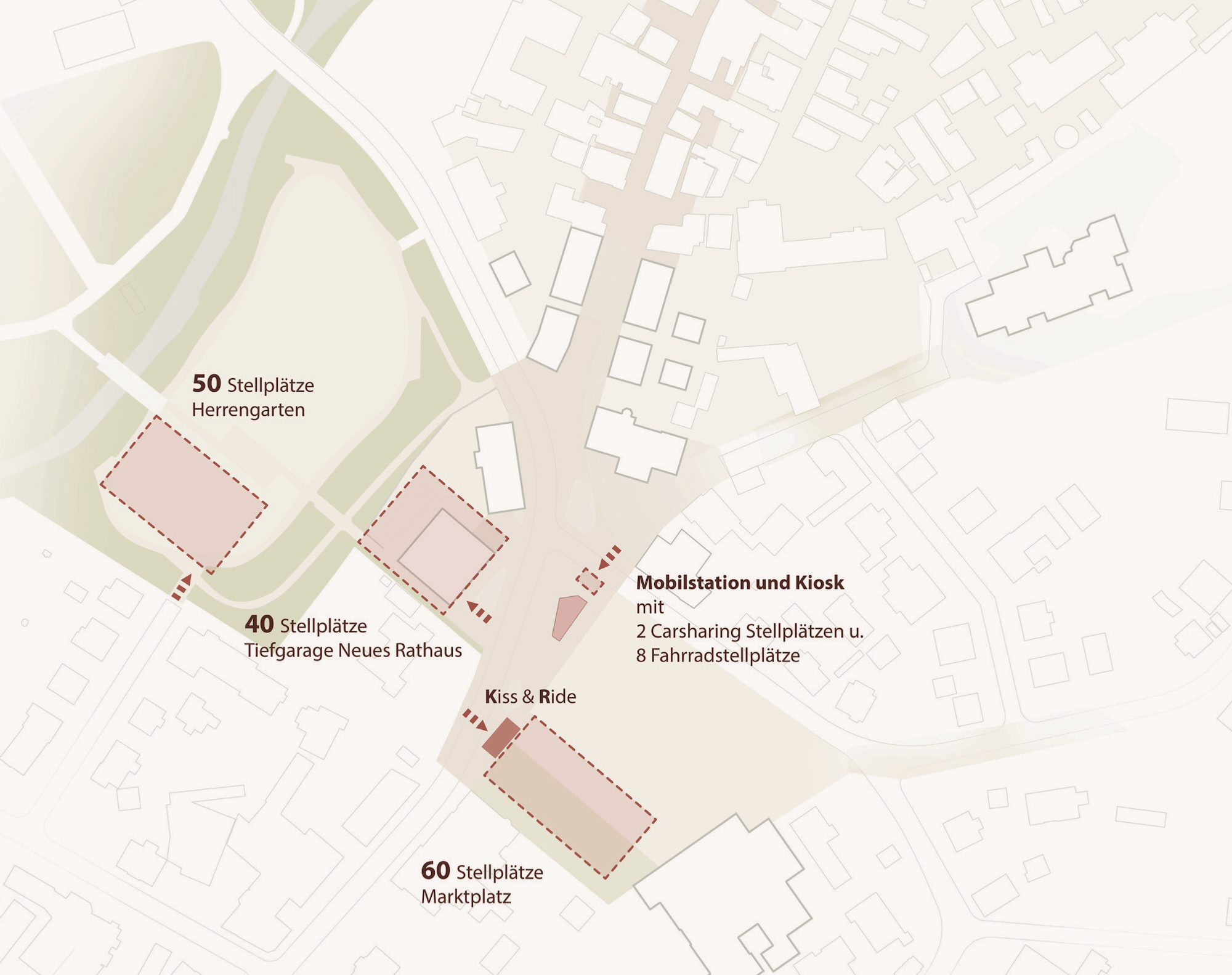
A new mobility hub is being built on the market square, bringing together all aspects of ‘soft mobility’. This includes car-sharing bays, bike-share stations and charging points for electric vehicles. The ‘Ortenberg Mitte / Rathaus’ bus stop will also be integrated into this hub.
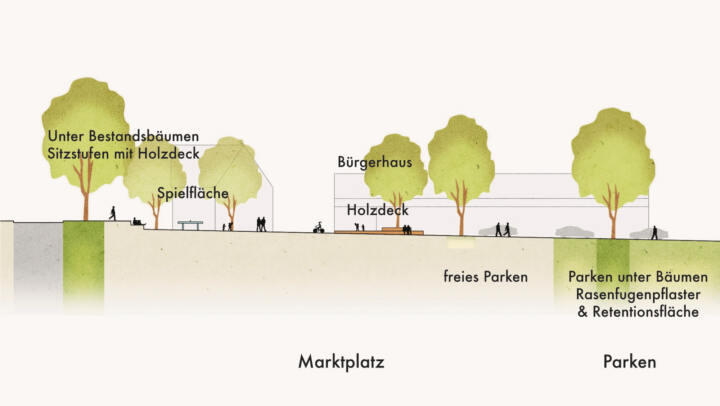
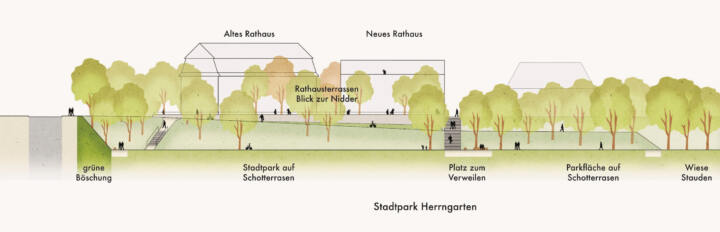
The parking concept provides for a balanced distribution of parking spaces across the town centre: 60 spaces will be located in the market square area, 40 spaces will be created in the underground car park of the new town hall, and a further 50 spaces in the Herrngarten area. This will ensure that parking facilities are organised in a decentralised manner and integrated sensibly into the respective areas of use.
Philipp-Glenz-Straße will be made a traffic-calmed zone and will in future be accessible only to residents and delivery vehicles. This will reduce through traffic and significantly enhance the quality of life in the neighbourhood.
Materiality
The materiality of the new town centre deliberately draws on Ortenberg’s historical identity. The central square is being paved with high-quality, non-directional natural stone, which lends the new urban space a durable, robust and, at the same time, prestigious appearance. The use of long-lasting, low-maintenance and resource-efficient materials also makes a sustainable contribution to future-proof and value-retaining town development.
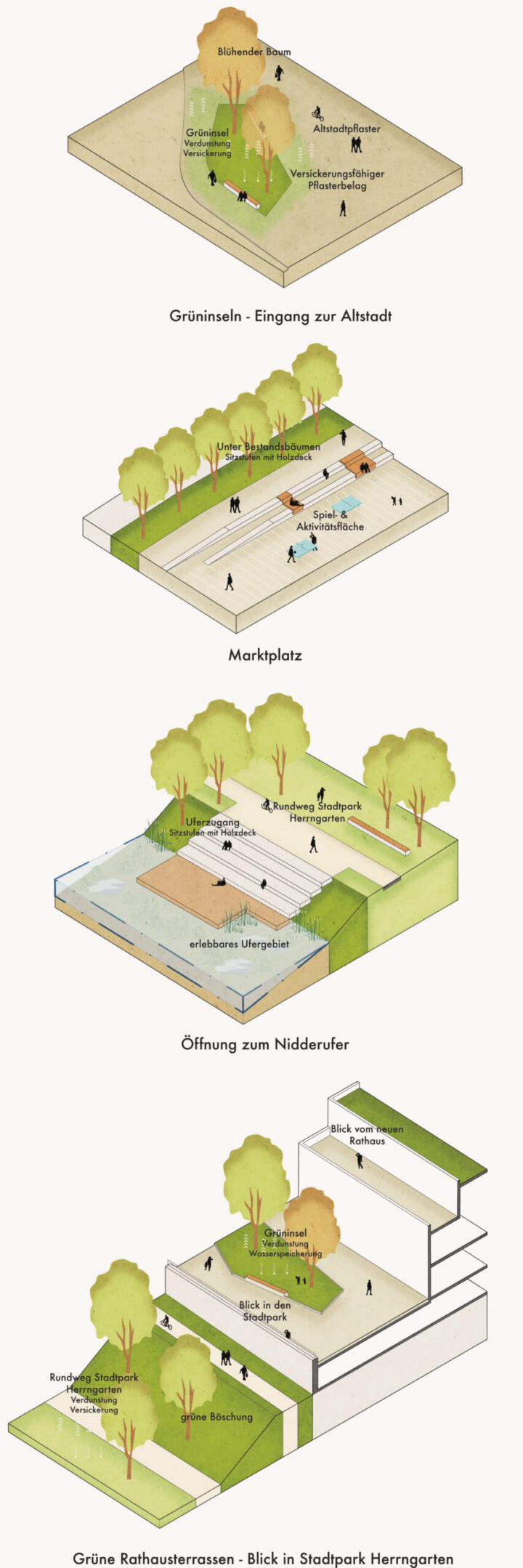
The characteristic paving of the old town is incorporated into the design and extended into the new central square. This creates a natural connection between the historic town centre and the new town centre. The old town and the new square merge into a cohesive urban space with high recognisability and a particularly pleasant atmosphere. At the edges of the green islands within the new urban space, permeable paving with open grass joints is used. These paved areas allow rainwater to infiltrate naturally on site. At the same time, the green joints create a soft transition between the square and the vegetated areas, emphasising the landscape character of the urban space.
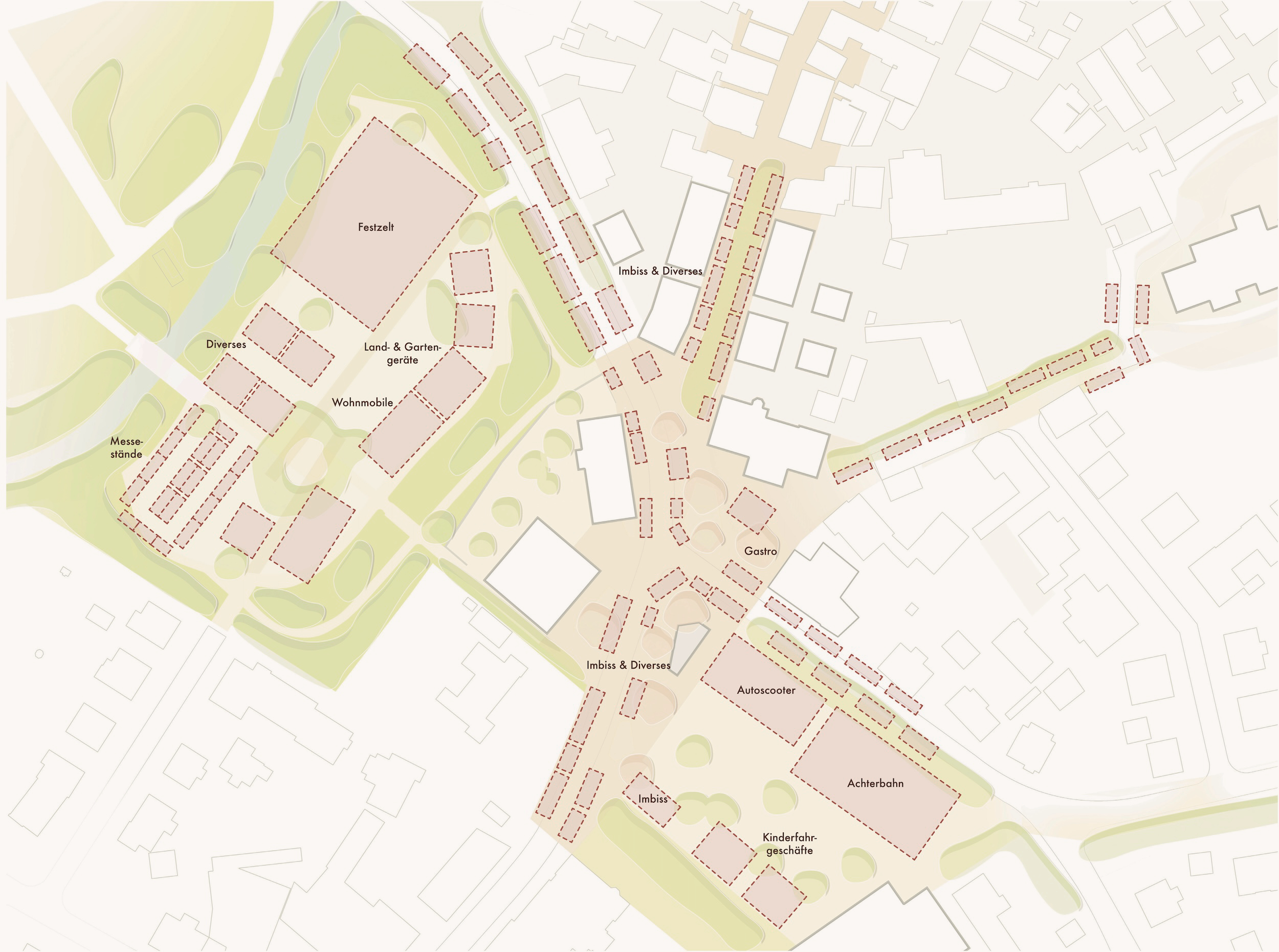
The market square will be fitted with a robust asphalt surface, creating a durable, hard-wearing and low-maintenance surface. This makes the market square particularly suitable for a variety of uses, such as weekly markets, festivals, mobile stages, temporary structures or access by delivery and emergency vehicles. At the same time, a level and accessible surface is created that is highly suitable for everyday use, whilst also providing space for informal play and physical activities such as cycling, skating or other spontaneous activities. The car park area will be constructed using permeable paving, allowing rainwater to seep directly into the ground on site. In the area of the new row of trees, a retention basin will also be created, which is important for the market square as it temporarily collects, stores and delays the discharge of rainwater.
The Herrngarten is being fitted with a durable gravel-turf surface that meets the functional requirements for market events, festivals and temporary uses. The area remains accessible to vehicles and durable, whilst at the same time serving as a green open space with a park-like character. Gravel turf combines usability with ecological benefits: the green surface improves the microclimate, reduces heat build-up compared to sealed surfaces and allows rainwater to seep away naturally. At the same time, the ground remains permeable and supports groundwater recharge. Gravel lawns also prove particularly robust in the event of temporary flooding. Excess water can be absorbed, temporarily stored and drained off gradually. Once the water has receded, the area quickly becomes usable again and remains permanently functional.
Rainwater / Retention
Sustainable rainwater management involves the targeted collection and retention of surface water, which is then allowed to infiltrate the ground at a later stage or released into the drainage system in a controlled manner. Green spaces, open basins and permeable surfaces help to relieve the burden on the sewerage system and promote a natural water balance in the town centre.
At the same time, the high proportion of unsealed and greened areas significantly reduces the formation of heat islands, as evaporation and shading improve the local microclimate. Rainwater is temporarily stored in open spaces, released at a delayed rate and partially infiltrated on site. This not only reduces the risk of flooding during heavy rainfall events but also ensures a controlled and nature-oriented integration into the water cycle.
The concept develops a sustainable town centre for Ortenberg that combines historic structures with new urban qualities. The reorganisation of the centre, the enhancement of the open spaces along the Nidder and the revitalisation of the market square create a versatile, identity-forming urban space.
The interplay of housing, public amenities, transport and open space creates a new centre with a high quality of life, a clear sense of place and a sustainable focus – serving as a vibrant meeting place for the entire community.