Recognition | Open space planning for the Jeetzel riverbank, Amtsgarten park and old cemetery
Lüchow
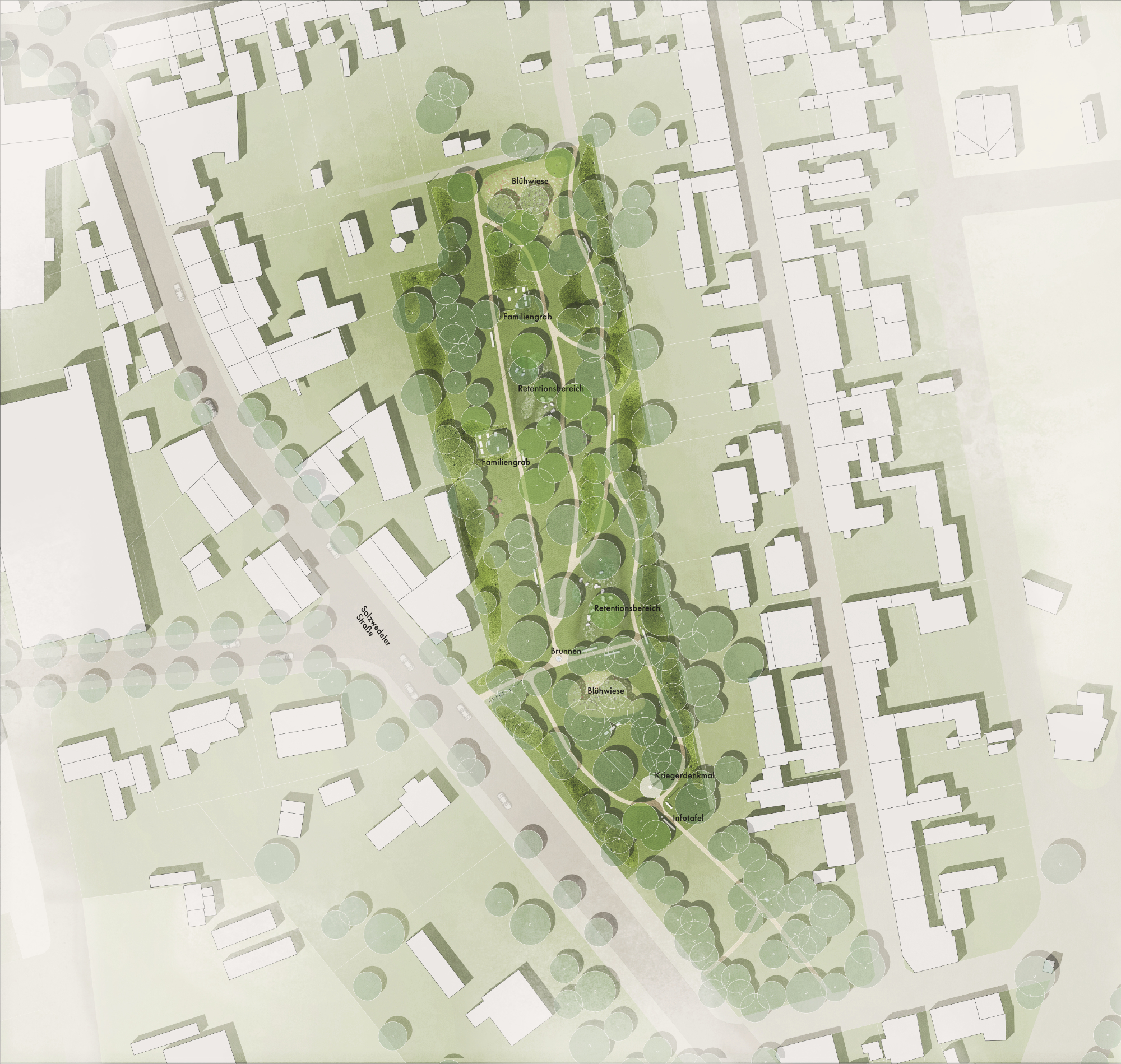
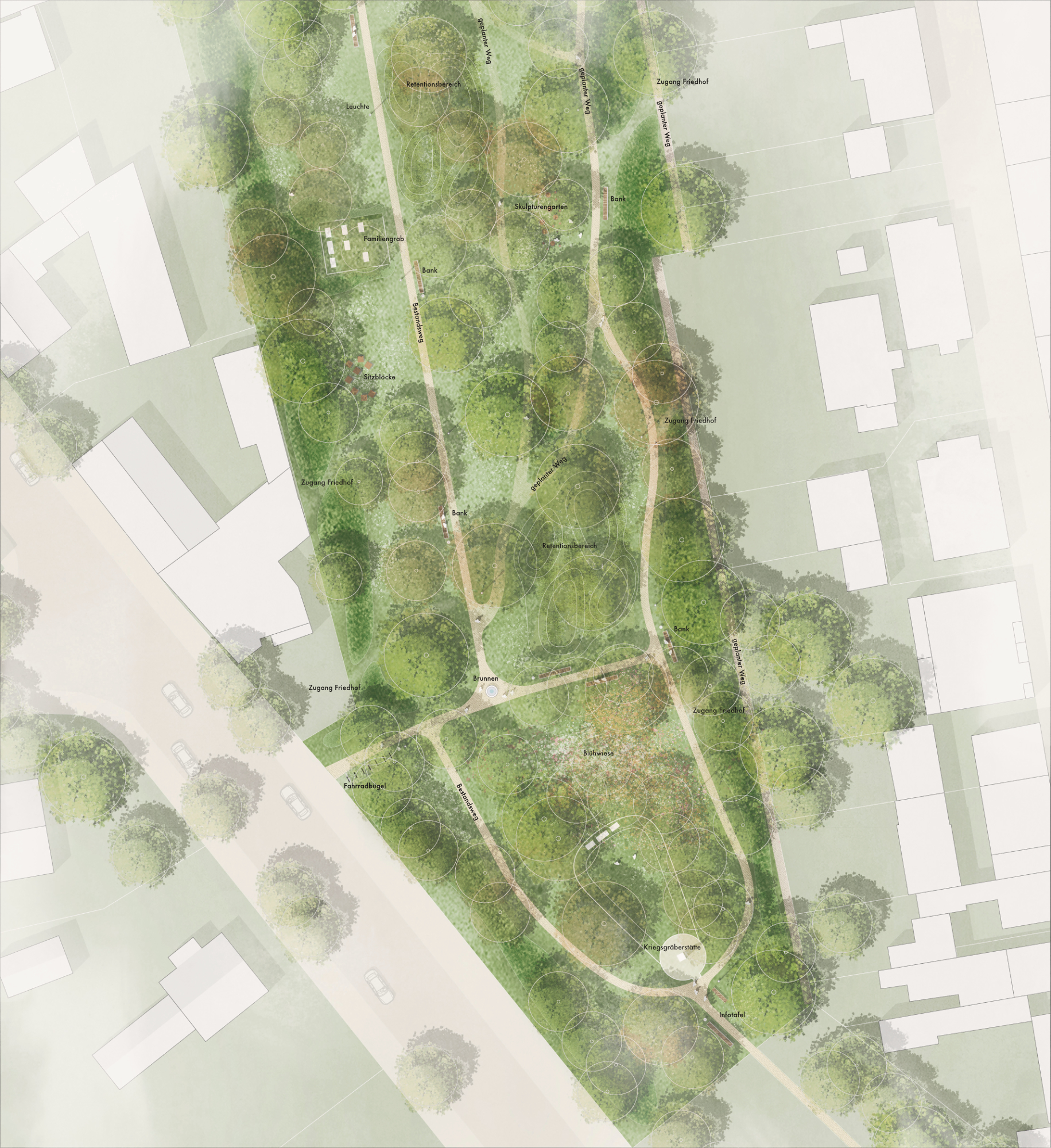
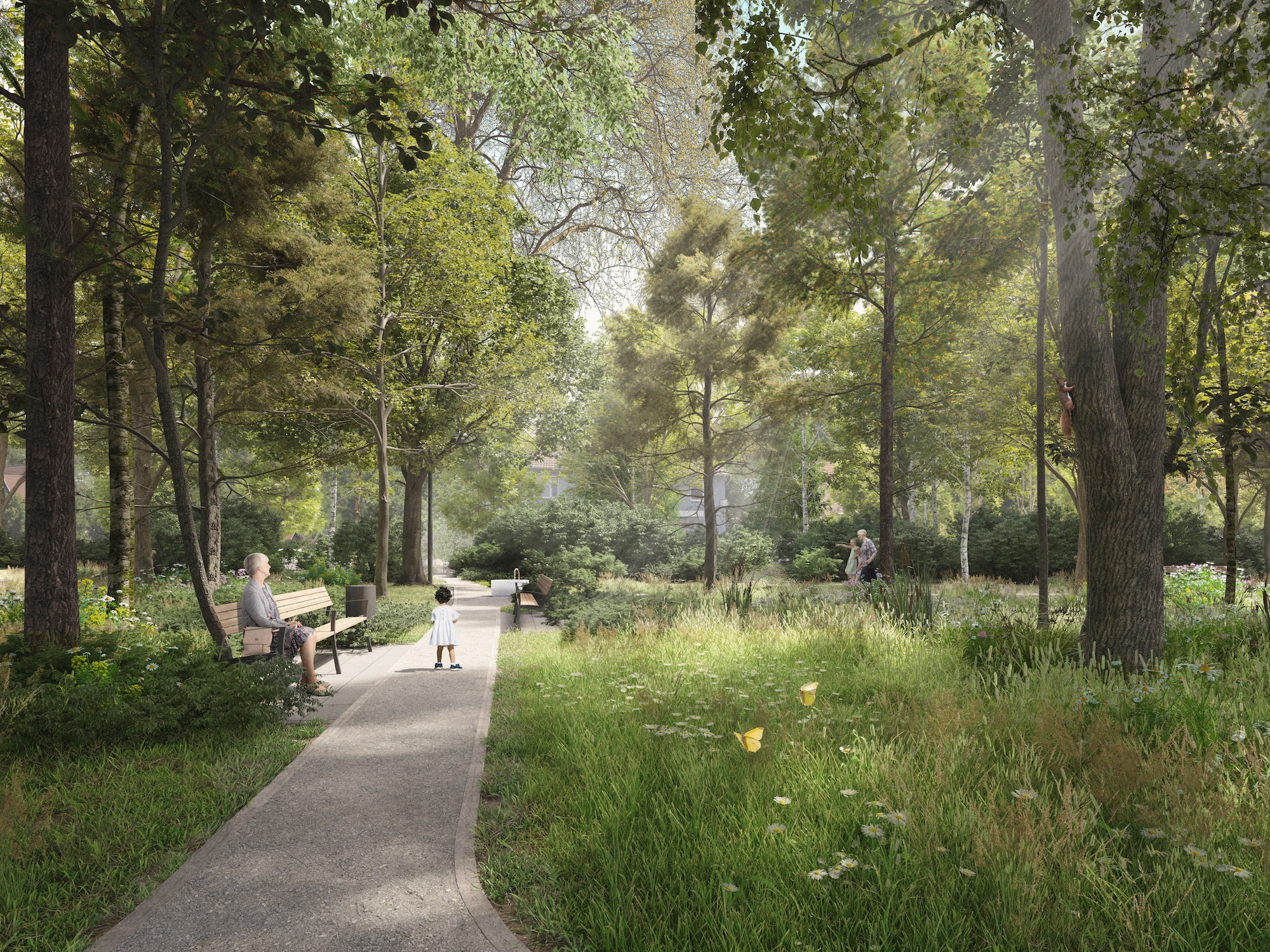
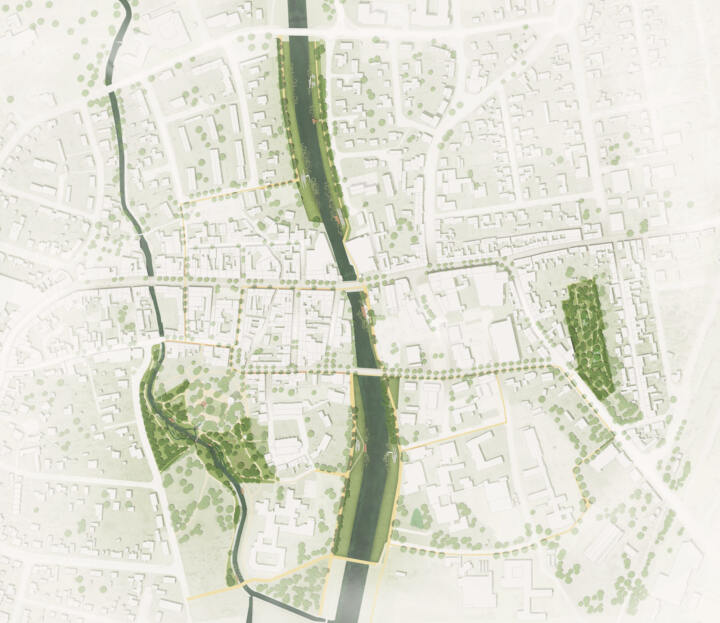
The three inner-city green spaces – Amtsgarten, Alter Friedhof and Jeetzelufer – form a continuous sequence of open spaces along Lange Straße, allowing visitors to experience nature, water and tranquillity in the heart of Lüchow. They are connected by a continuous, barrier-free path system, enabling visitors to easily explore the different qualities of each area. Uniform furnishings, lounge and relaxation areas provide orientation and enhance the quality of the experience, while the different landscape characteristics of the three spaces convey different atmospheres. The design combines historical, social and ecological aspects, strengthens the identity of the city centre and offers places for people of all generations to meet, relax and enjoy local recreation.
The deliberate sequence of green spaces creates clear connections between the individual areas as well as an overarching urban experience. The integration of natural design elements, planting and water-related structures supports the ecological function, strengthens biodiversity and contributes to a sustainable, resilient city centre. The result is a coherent overall concept that enhances the quality of life, appeals to different user groups and positions the city centre as a vibrant urban space with a strong identity in the long term.
Jeetzel riverbank
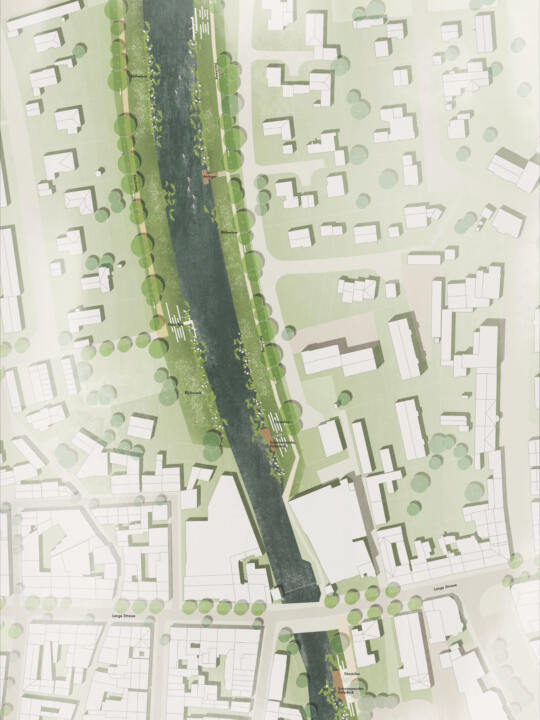
The Jeetzel river flows through the centre of Lüchow from north to south and shapes the cityscape as an inner-city river. Historically used as a transport route, today the Jeetzel primarily serves functions in flood protection, urban structure and ecological concerns. The inner-city banks are currently heavily regulated, with only a few natural recreation areas available, and the river remains largely inaccessible to citizens.
The aim of the redesign is to integrate the Jeetzel more closely into city life, strengthen its ecological potential and create new opportunities for recreation and experiences. Taking into account the urban conditions and flood protection, a concept was developed that combines natural design with recreational opportunities.
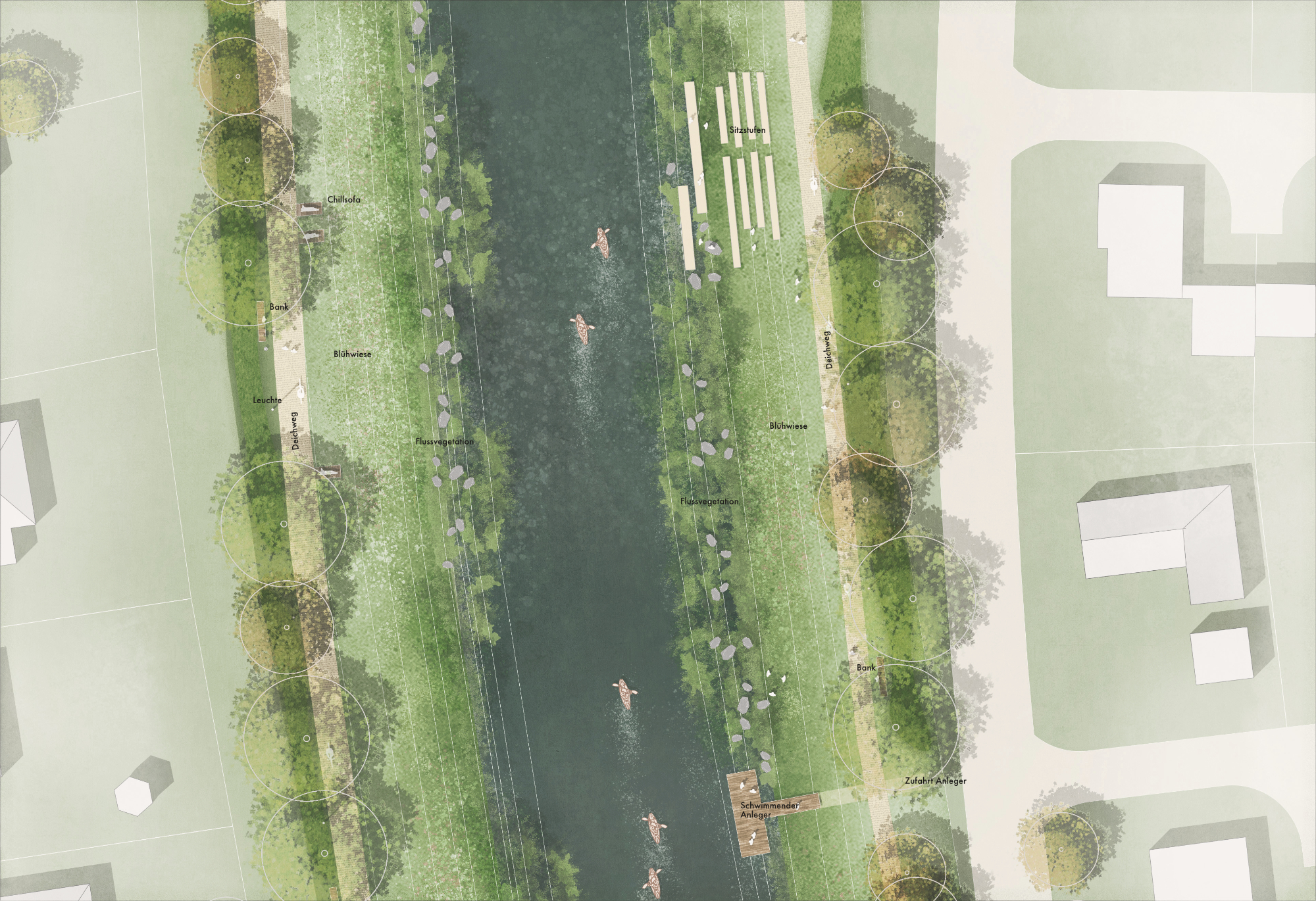
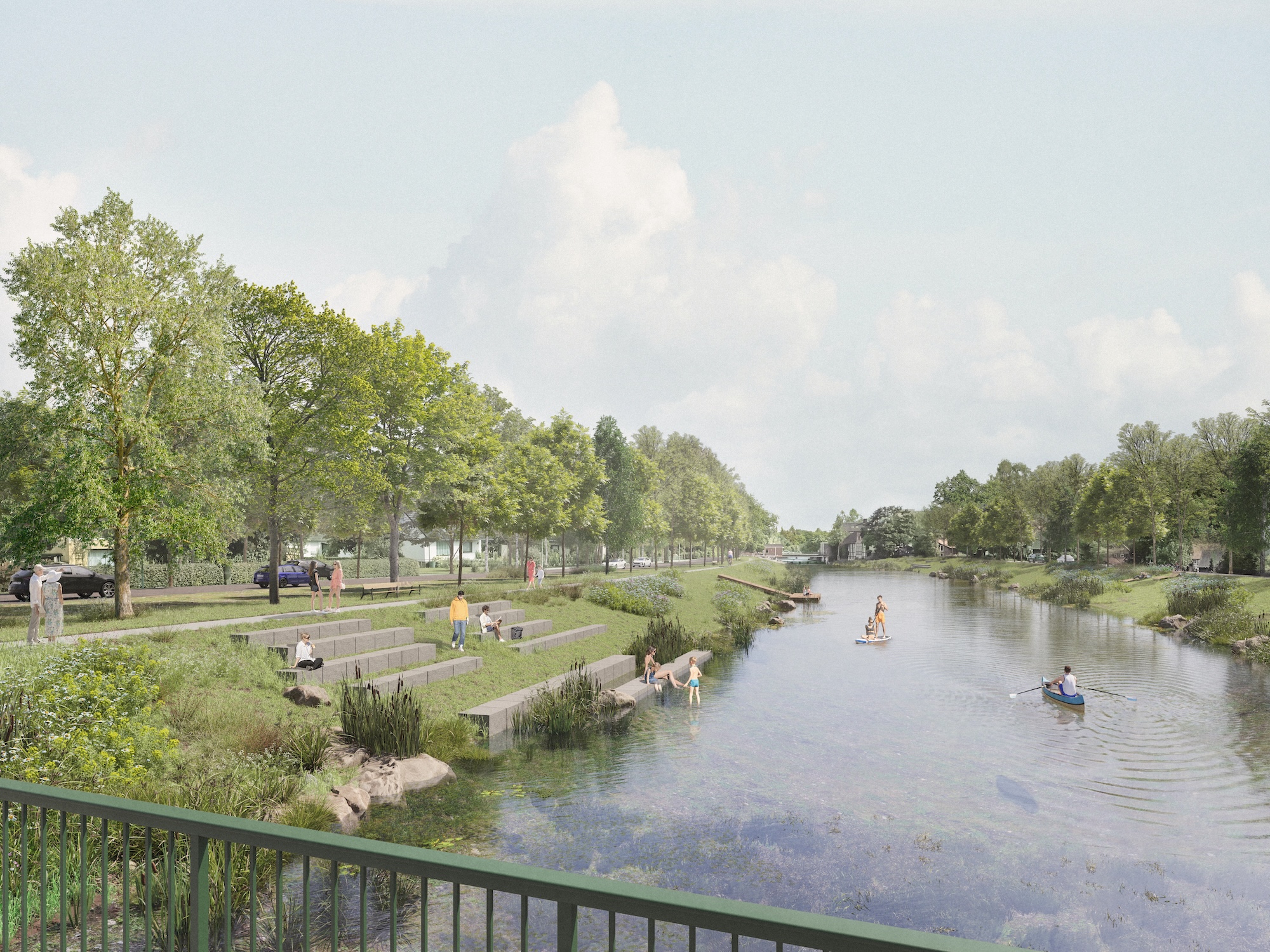
Seating steps have been integrated into the embankment at several points along the riverbank, and floating wooden decks have been installed on the water in some places, allowing visitors to experience the river up close. In the northern area, a landing stage for canoes and similar uses is also being built, supplemented by safe access from the road ‘Am Deich’. The southern recreation area, on the side of the retirement home, has been designed to be barrier-free, so that people of all ages can reach and enjoy the water via a ramp integrated into the embankment.
The sequence of recreational areas blends harmoniously into the urban structure: sometimes urban, sometimes close to nature, creating a varied experience. In addition, new benches and so-called ‘chill sofas’ have been installed along the existing paths, inviting visitors to take short breaks and linger on the banks. In order not to compromise flood protection on the dyke, it was kept free of trees and permanently installed fixtures. Instead, new trees were planted along the paths on the side facing away from the water, providing shade on the paths and seating areas and thus further enhancing the recreational facilities.
The embankments were planted with vegetation typical of the location in many places. Plant communities typical of rivers in the water and on the banks contribute to ecological diversity, promote biodiversity and support the natural purification of the water. Flowering meadows along the shore zones provide additional habitat for insects and other small animals. The meadows are mowed twice a year to ensure that the embankments are flood-proof.
The result is a Jeetzel riverbank that enhances the town, offers residents new recreational opportunities and spaces for exercise, and at the same time strengthens ecological functions. The redesign combines urban life, nature and water experiences, thus contributing significantly to the enhancement of Lüchow’s town centre.
Amtsgarten park
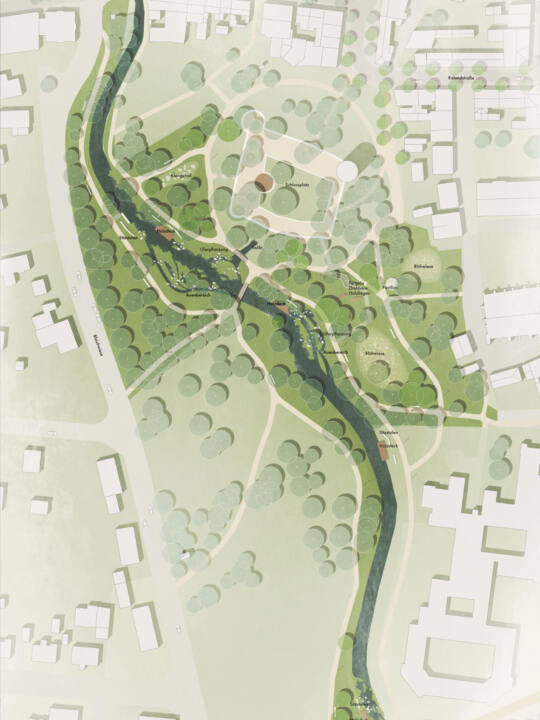
The listed Amtsgarten forms an important green space in the south-west of Lüchow. As a historic park with a rural character, it is shaped by the course of the Drawehner Jeetzel, which flows through the grounds in gentle curves and remains a defining feature of the area.
The aim of the redesign is to enhance the existing qualities of the Amtsgarten, improve its amenity value and make the connection to the water more tangible. Taking into account the requirements of monument preservation, a careful, nature-oriented upgrade was carried out that respects existing structures while creating new offerings for different user groups.
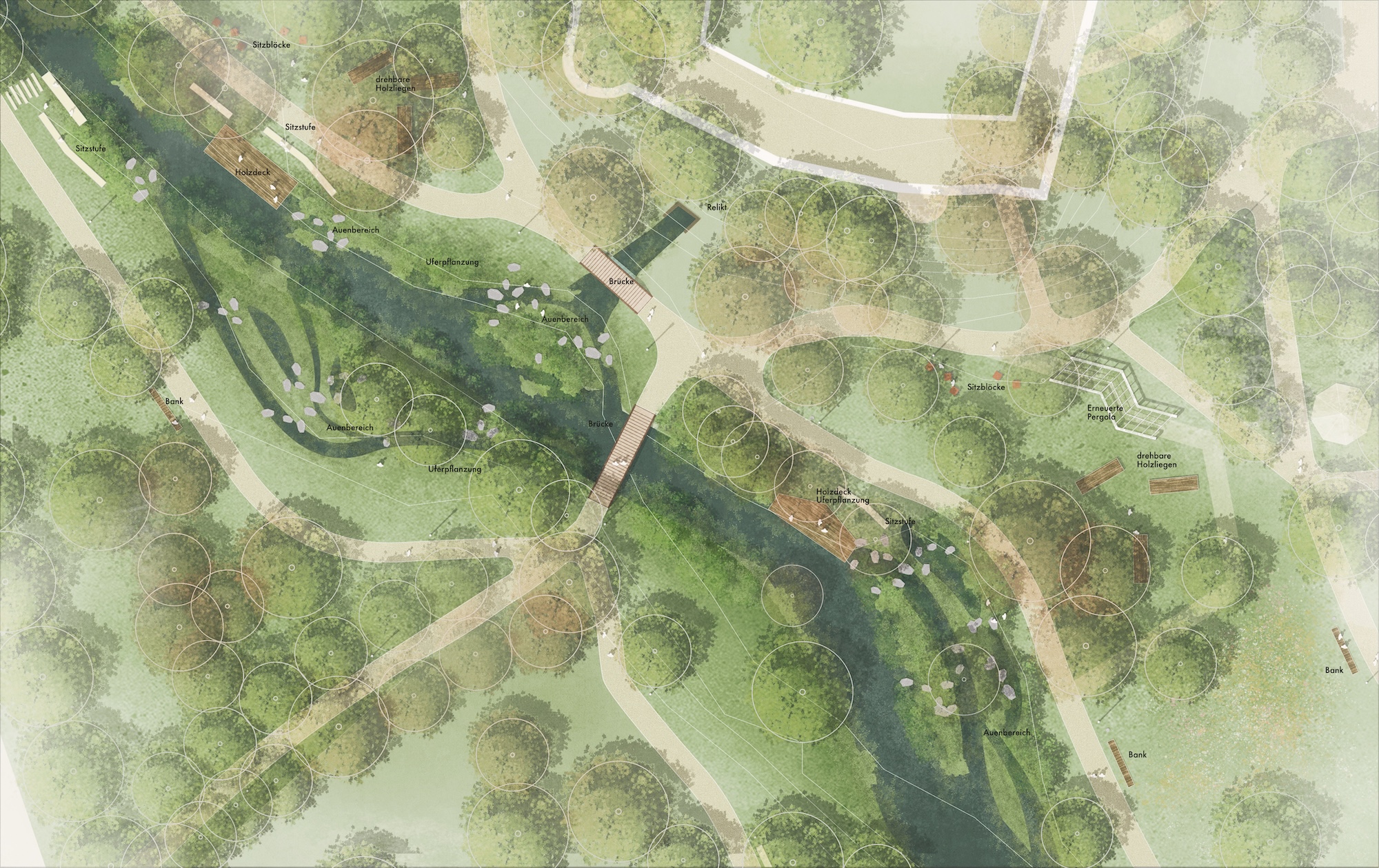
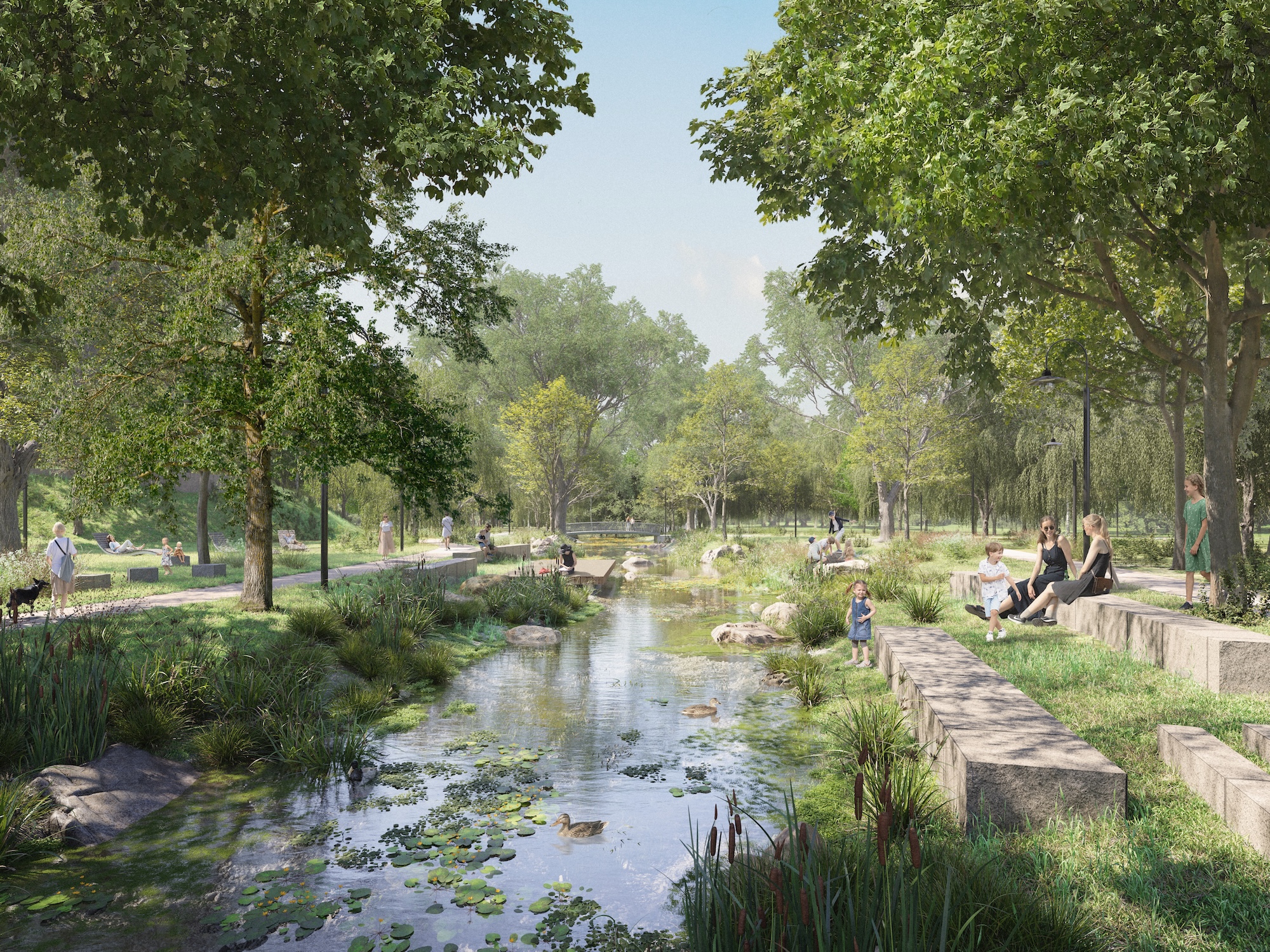
The path layout has been supplemented and improved to provide clear orientation and better access without detracting from the landscape character. Along the Drawehner Jeetzel, sections of the riverbank have been opened up to create an accessible floodplain area. Typical river vegetation and water-purifying plants strengthen the ecological function and promote biodiversity. Seating steps and wooden platforms invite visitors to linger by the water and create places where the water can be experienced with all the senses.
The pergola was renovated and the historic relic preserved as an identity-defining element. A newly added, weather-protected pavilion complements the offering and provides a sheltered place to relax. A sound trail and newly created wildflower areas add further layers of experience, making the Amtsgarten a place of discovery.
The subtle, natural design and the uniform, understated use of materials and forms create a harmonious overall picture that preserves the historic character. The Amtsgarten thus becomes a local recreation park that combines nature, history and green spaces – a green experience in the middle of the city that sustainably enhances the ecological and atmospheric quality of the location.